
A small espresso machine has to do two things. Pull a real shot, and earn its slot on a counter that’s already running out of room. Most “best small espresso machine” roundups don’t really pick for small kitchens — they’re just “best espresso” lists with the giant machines hidden, ranked on the same criteria. We picked these because they belong in a small kitchen: footprint, cabinet clearance, water-tank access, and whether each one still pulls real espresso once it actually fits.
Our pick for most people is the Breville Bambino Plus. It’s the narrowest semi-automatic we’d actually recommend, the auto-steam wand makes milk drinks foolproof on day one, and it tucks under a standard 18-inch upper cabinet without drama. Check Current Price
At a Glance: 5 Best Small Espresso Machines
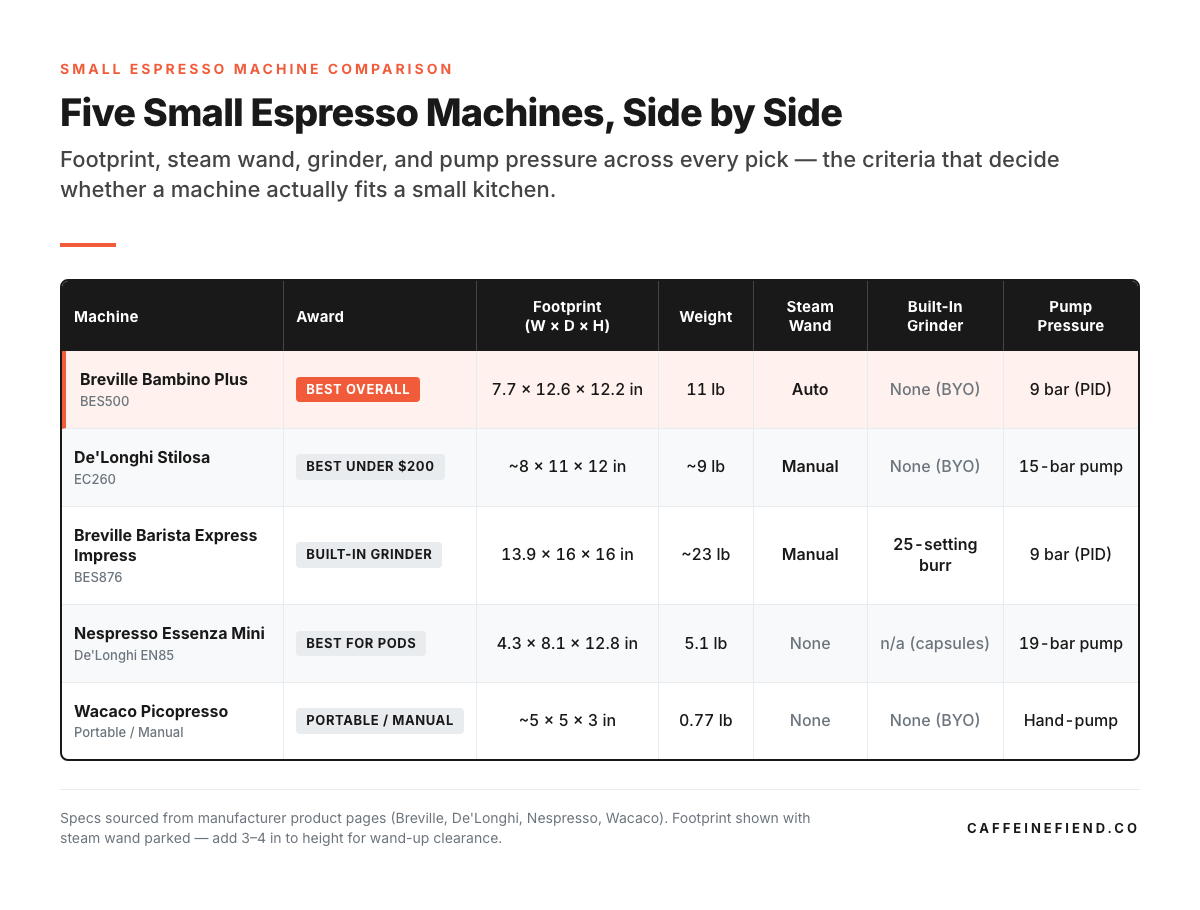
| Award | Machine | Best For | Footprint (W × D × H) | Steam Wand | Built-In Grinder |
|---|---|---|---|---|---|
| Best Overall | Breville Bambino Plus (BES500) | Real espresso + easy milk in the smallest semi-auto worth owning | 7.7 × 12.6 × 12.2 in | Auto, adjustable | No |
| Best Under $200 | De’Longhi Stilosa (EC260) | First espresso machine on a strict budget | ~8 × 11 × 12 in | Manual | No |
| Best with Built-In Grinder | Breville Barista Express Impress (BES876) | One-box setup if you have the counter width | 13.9 × 16 × 16 in (with hopper) | Manual | 25-setting conical burr |
| Best for Pod Users | Nespresso Essenza Mini (EN85) | Smallest possible footprint, zero learning curve | 4.3 × 8.1 × 12.8 in | None | n/a (capsules) |
| Best Portable / Manual | Wacaco Picopresso | No counter space at all (RV, dorm, desk, travel) | Pocketable (~5 × 5 × 3 in) | None | None (manual grinder) |
How We Picked
We threw away every recommendation we couldn’t defend on the criteria that decide whether a small espresso machine actually works in a small kitchen. Five made the cut. Here’s what we cared about:
- Real brew pressure, not pump marketing. A “15-bar” or “20-bar” rating tells you the pump’s maximum, not the pressure at the puck. The actual extraction target is around 9 bar, per the Specialty Coffee Association’s espresso brewing standard. A “20-bar” machine that tops out at 5 bar during the actual pull is pulling watery filter coffee, not espresso. Every pick here passes, which is also why our best cheap espresso machines roundup throws out so many of the cheap mini-machines that fail this test.
- Footprint with the wand up. Manufacturers publish width × depth × height with the steam wand parked. The dimension that decides whether a machine fits under your cabinet is the height with the wand swung up, which is usually three or four inches taller than the spec sheet says. Standard countertop-to-upper-cabinet clearance is 18 inches, per Angi’s home renovation guide.
- Water-tank refill access. Back-loaded tanks need six-plus inches of clearance behind the machine, or you’re sliding it forward every morning.
- One specific in-use observation per pick plus an honest con on every pick, including the top one.
A note on transparency. We researched these picks rather than running every one through our own kitchen for this specific roundup. We leaned on hands-on reviews from sources we trust (Tom’s Guide, TechGearLab, Home Coffee Expert, CoffeeGeek) plus our history with the Breville and De’Longhi lines from prior coverage. Every in-use observation below traces to a named hands-on reviewer, not to a spec sheet. The editorial roundups that beat us on first-hand testing usually lose to us on small-kitchen specificity; this article tries to win on both.
Best Overall: Breville Bambino Plus (BES500)
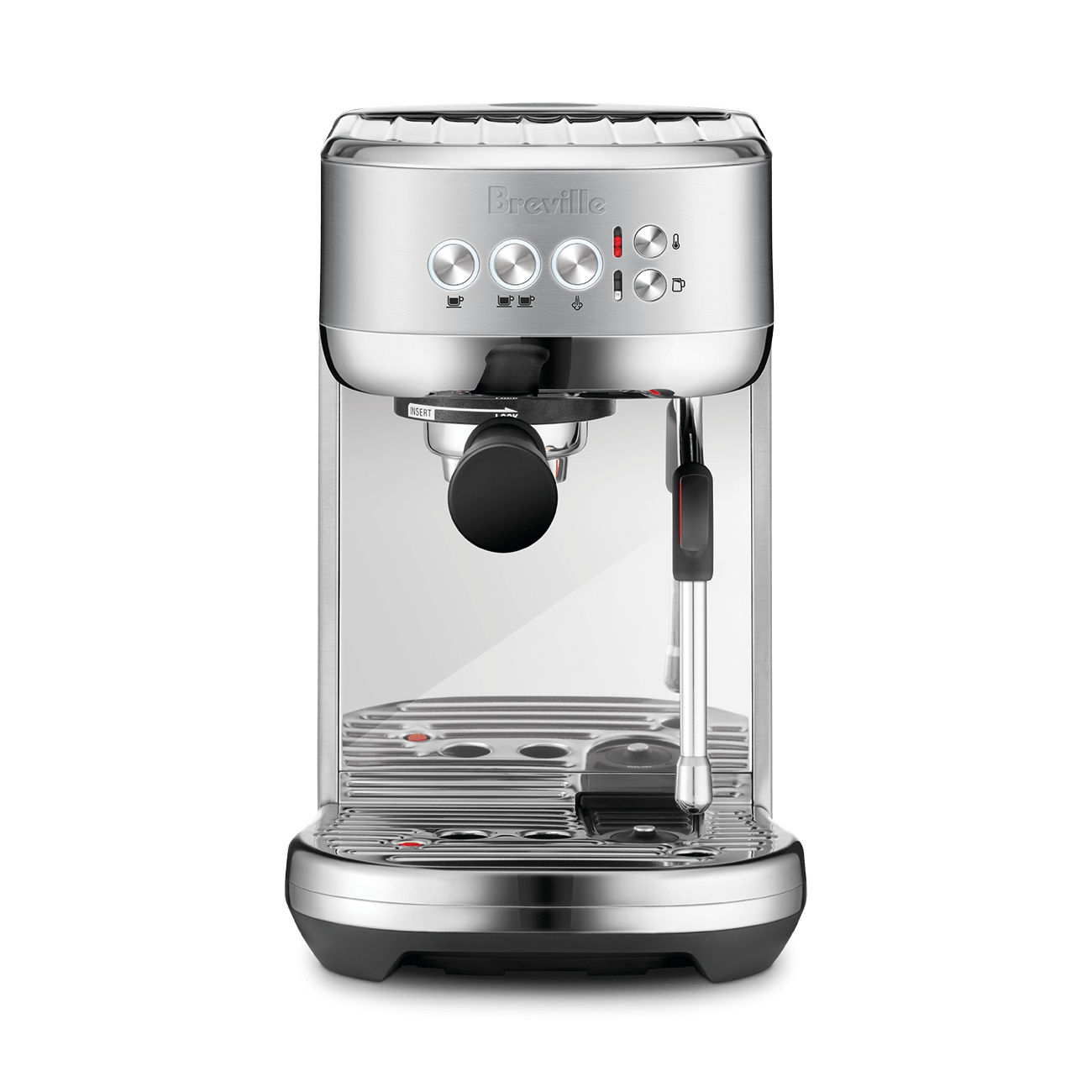
Verdict: The Bambino Plus is the small home espresso machine we’d buy for most people, and it’s not particularly close. At 7.7 inches wide and 12.2 inches tall with the wand parked, it’s the narrowest semi-automatic that still pulls real specialty-grade espresso, and the auto-texturing steam wand makes lattes and flat whites embarrassingly easy on day one. Tom’s Guide’s hands-on reviewers called it the reigning entry-level champ, and the title is earned.
The ThermoJet heating system gets the machine to brewing temperature in about three seconds (per Breville’s spec) . The built-in PID holds brew temperature consistent shot to shot.
Lock in the 54 mm portafilter, hit the volumetric button for a single or double, and it’ll pull and stop on its own. The auto-steam wand reads the pitcher and texturizes the milk to a temperature and froth level you set, so beginners get café-quality milk on the first try.
Pros:
- Smallest semi-automatic footprint we’d actually recommend
- Three-second heat-up means it doesn’t live plugged in and ready all day
- Auto-steam wand removes the biggest milk-drink learning curve at this price
- Built-in PID produces shot-to-shot consistency budget machines can’t match
Cons (the honest one): The pump vibrates noticeably during the pull, enough that you can’t stack mugs on top of the machine, and enough that TechGearLab’s hands-on reviewers called out the drip tray filling fast as a related daily annoyance. The PID temperature is also fixed (not user-programmable), so if you want to dial brew temp for a light-roasted single origin, this isn’t the machine.
Best for: The reader upgrading from drip or pods who wants real espresso from fresh-ground beans, has no counter space to spare, and wants the auto-steam wand to do the milk work.
Best Under $200: De’Longhi Stilosa (EC260)
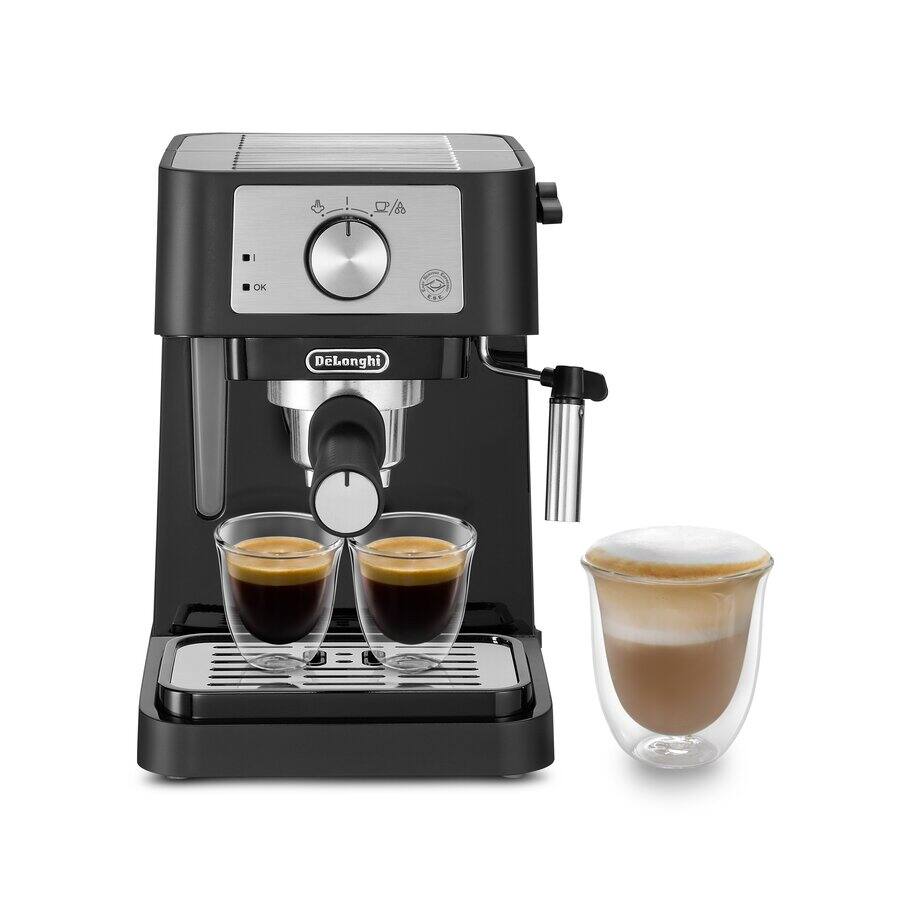
Verdict: The Stilosa is the honest sub-$150 path to a real pump espresso machine. It has no built-in grinder, and the body has plastic where a more expensive machine would have metal. It does have a 15-bar pump (more headroom than you need to hit the 9-bar brewing target), a stainless boiler that tends to heat faster than the aluminum boilers in the same price bracket, a usable manual steam wand, and a footprint that fits anywhere. Tom’s Guide’s hands-on reviewers called it a machine that “performs like an espresso machine double the price,” and we’d agree.
In use it’s a true compact espresso machine, about 8 inches wide, light enough to move when you need the counter for something else, simple enough that the learning curve is the milk wand and not the brewing. The manual steam wand asks you to learn milk texturing (a feature for the patient, a bug for the rushed). The ~35-ounce removable tank is plenty for two or three drinks a day. It ships with pressurized single and double baskets, which are forgiving of pre-ground supermarket coffee. (Breville’s own pressurized-vs-non-pressurized explainer is the clearest read on what that trade-off does to the shot.)
Pros:
- Cheapest pick on this list that pulls a real shot rather than a faux-pressed approximation
- Stainless boiler heats faster than the aluminum boilers in the same price bracket
- Removable ~35-ounce tank is easy to refill from the side
- Smaller than the Bambino on the depth axis; slides cleanly into a narrow counter slot
Cons (the honest one): The body has plastic components that feel cheaper than the price tier above, and it ships with pressurized baskets only. If you eventually upgrade to fresh-ground specialty espresso with a real grinder, you’ll need to swap in non-pressurized baskets and learn proper puck prep, which the Stilosa supports but doesn’t ship ready for.
Best for: The first-time espresso shopper on a strict budget who wants a real pump machine (not a Moka pot or an AeroPress workaround) and is willing to grow into proper puck prep later. If your budget caps out below $200, this is the small espresso maker we’d buy.
A quick alternate worth naming: the Casabrews CM5418 is the narrowest sub-$200 pump espresso machine we know of, roughly 6 inches wide, with a real one-hole commercial-style steam wand. Tom’s Guide flagged slow heat-up, noticeable noise, and counter vibration. We’d pick the Stilosa for the longer hands-on track record; if “narrowest possible” is the only criterion, the Casabrews wins on that axis.
Best with Built-In Grinder: Breville Barista Express Impress (BES876)
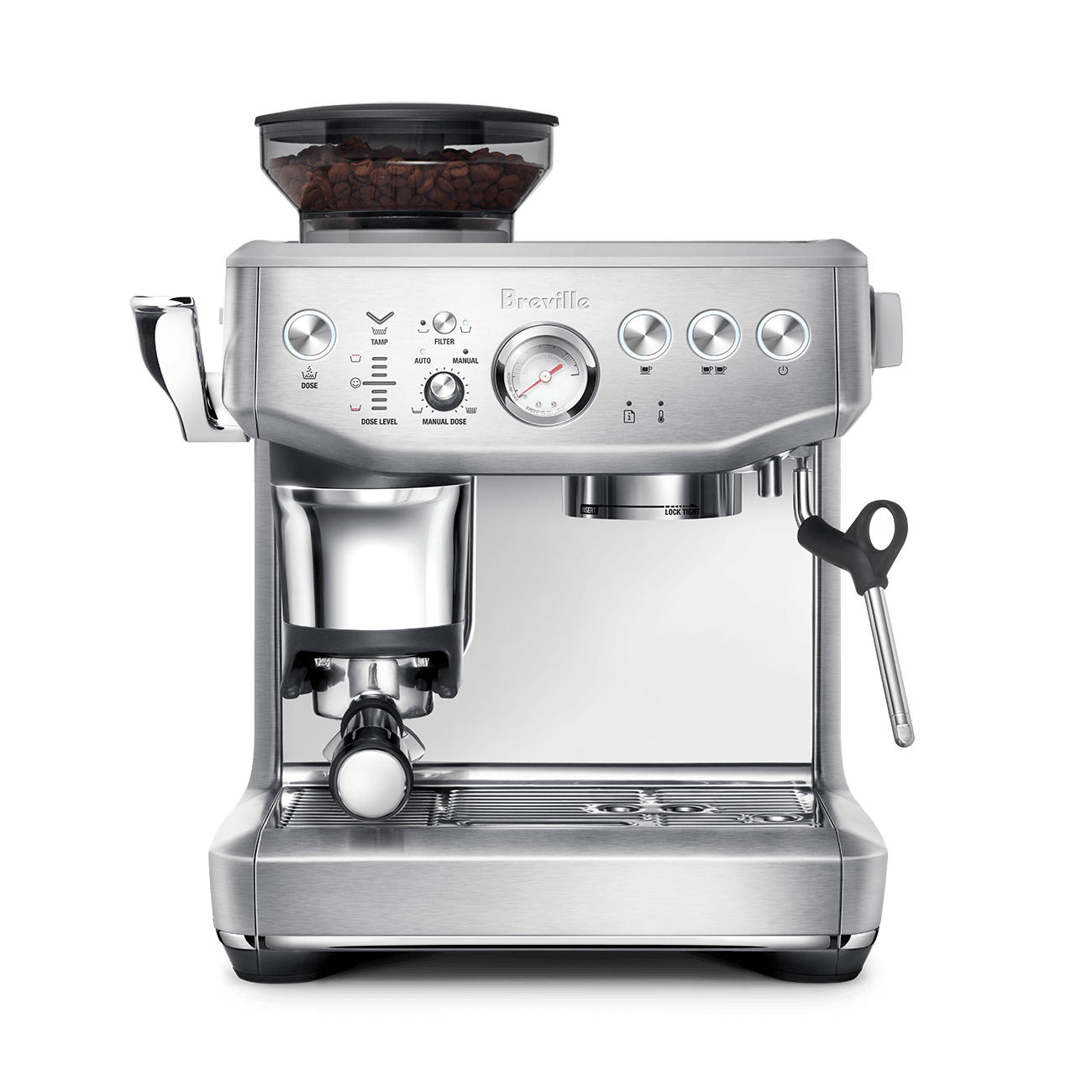
Verdict: The Barista Express Impress is the closest thing to a one-box path to defensible home espresso. It bundles a 25-setting conical burr grinder, an assisted-tamping system that applies a calibrated 22 pounds of pressure plus a 7-degree polish twist, a PID-controlled ThermoCoil boiler, and a 54 mm portafilter into a single machine. That means it eliminates the second-machine grinder requirement and the puck-prep learning curve at the same time. If you’re shopping for the best small espresso machine with grinder built in, this is it.
The heating system matters. The ThermoCoil heats the whole machine, including the grouphead, so the first shot of the morning comes out at temperature instead of pulling cold-grouphead and tasting sour. CoffeeGeek’s first look at the larger Touch Impress sibling called out that exact behavior: better first-shot temperature stability than ThermoJet machines (the Bambino Plus included), at the cost of a 30-to-40-second warm-up vs. the Bambino’s three seconds.
If you only pull one or two shots a day, the warm-up matters less. If you brew on demand throughout the morning, it disappears entirely after the first shot.
Pros:
- Best compact espresso machine with grinder for someone who doesn’t want to learn tamping
- Better first-shot temperature stability than ThermoJet machines, thanks to the ThermoCoil heating the grouphead
- 25-setting grinder dialed-in enough for real specialty espresso
- One box, one footprint, one purchase
Cons (the honest one): This is the biggest machine in the roundup, by a lot. The footprint is 13.9 inches wide and 16 inches tall with the hopper installed, a real squeeze under the standard 18-inch upper-cabinet clearance once you account for hopper-fill access and the steam wand swing. Measure your cabinet height with the wand swung up and confirm you can get the hopper lid off without unmounting the machine.
Best for: The reader who wants a one-box setup, doesn’t want to learn puck prep, and has enough counter width for a 14-inch-wide machine.
Best for Pod Users: Nespresso Essenza Mini (De’Longhi EN85)
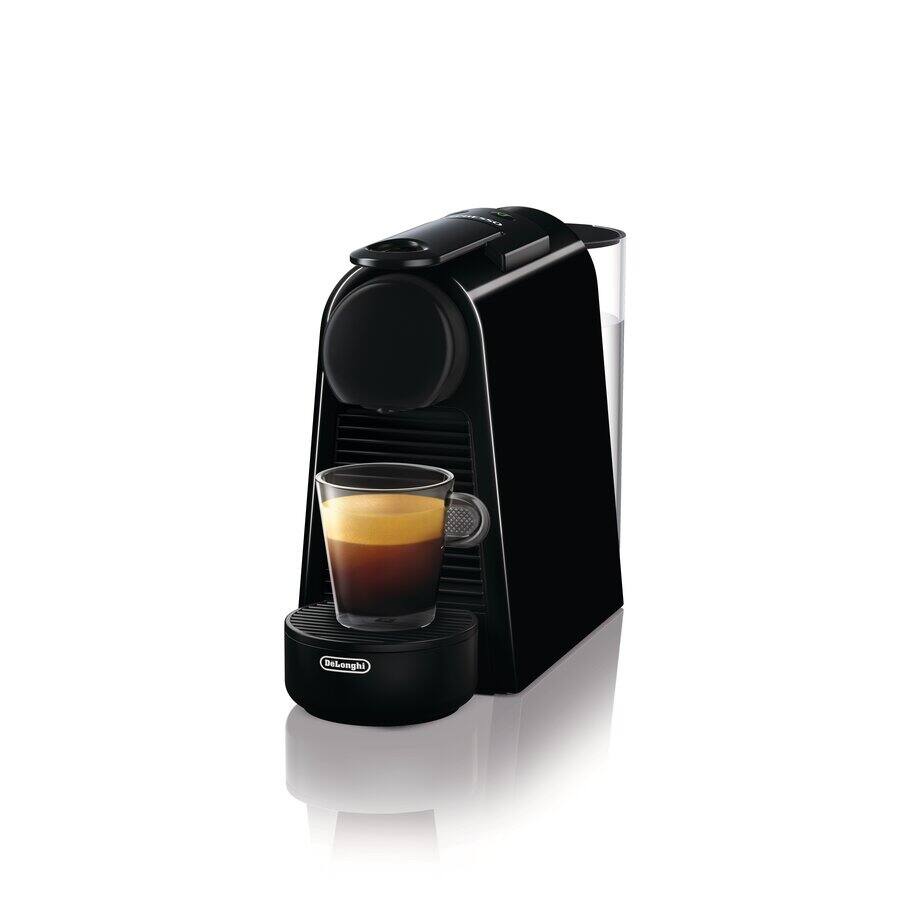
Verdict: The Essenza Mini is the smallest current Nespresso machine: 4.3 inches wide, 8.1 inches deep, 12.8 inches tall, 5.1 pounds. It’s the genuine fits-anywhere pick for the small-kitchen reader who values footprint and zero fuss over crema craft. Tom’s Guide’s hands-on review framed it as “minimaluxe,” and the framing fits. Drop a capsule in, hit a button, get espresso. No grinder, no tamping, no learning curve.
Past-week espresso-drink consumption among US adults rose from 40% in 2022 to 45% in 2026, per the Spring 2026 NCDT report from the National Coffee Association. A lot of those new espresso drinkers don’t want to learn the craft. They want one-touch espresso in a kitchen that already has a toaster and a kettle on the counter. That’s the Essenza Mini’s job, and it does it better than anything else its size.
The 25-second warm-up means it’s ready before you’ve decided what mug to use. One-touch single or double shot. The 19-bar pump is plenty for the pressurized brew chamber inside the capsule. There’s no steam wand, but the Aeroccino-bundled variant is worth the upsell if you want milk drinks.
Pros:
- Smallest plug-in espresso machine in this roundup, full stop
- 25-second warm-up; instant espresso in practical terms
- Zero learning curve, zero cleanup
- Sub-$200 price tier, so the entry cost matches the size
Cons (the honest one): The water reservoir and the used-capsule container are both small, exactly the trade you’d expect from a machine this size, but it becomes daily friction in a household pulling four-plus drinks a day. Both want emptying or refilling at the start of every morning. Also: Original-line capsules only, no Vertuo support.
Best for: The pod-curious reader who wants one-touch espresso with no learning curve, and anyone shopping for a small home espresso machine for a guest room, office, or in-law unit.
Best Portable / Manual: Wacaco Picopresso
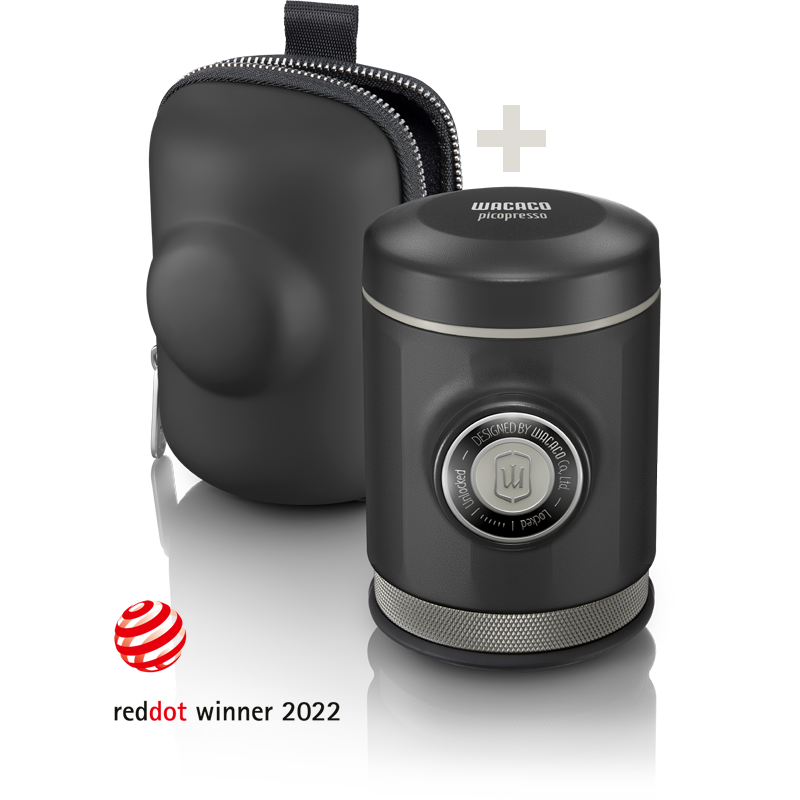
Verdict: The Picopresso is the only portable espresso maker we’d recommend to someone who actually cares about espresso. It weighs 350 grams (0.77 pounds), takes up effectively no counter space, has no electrical requirements, and uses a 52 mm commercial-spec basket that takes up to 18 grams for doubles. That spec is the line between Picopresso and the gimmick portables that produce a sad teaspoon of crema-less brown water. Home Coffee Expert’s hands-on review called the shots “remarkably smooth and rich with a good amount of texture, wonderful clarity and dense flavors, with rich, thick crema as authentic as you’d expect from an expensive high-end machine.”
In practice, the Picopresso is the small espresso maker you grab when your kitchen has zero counter to give. RV, dorm, office desk, or the shelf in a tiny apartment that already has a French press on it.
Pre-heat the chamber by running boiled water through, lock in the naked portafilter, pump the chamber by hand, and pull a 50-or-so-mL double shot of real espresso with crema. The whole setup, including a hand grinder and a kettle, fits in a small drawer.
Pros:
- 52 mm commercial basket and naked portafilter; real espresso hardware in a 0.77-pound package
- No electricity, no plumbing, no permanent counter presence
- Pairs with a quality hand grinder for a complete kitchen-less brewing setup
- Cheaper than every other pick on this list except the Stilosa
Cons (the honest one): The Picopresso punishes a cheap grinder. The 52 mm basket and naked portafilter expose every grinding inconsistency, so you’ll need a real burr hand grinder to get the shots it’s capable of (figure another $80–$200). It also needs thorough pre-heating (a cold chamber kills the shot), and the hand-pump means shot-to-shot consistency depends on how steadily you pump. A good coffee tamper helps the puck prep too, since the included one is basic.
Best for: The reader with no counter space to give an espresso machine, or the craft-curious reader who wants to learn lever-style espresso with a setup that disappears between shots. If you’ve also been eyeing AeroPress espresso, the Picopresso is what you graduate to once the AeroPress can’t pull real crema.
Two portable alternatives worth knowing about: the Outin Nano is the self-heating portable that resolves the “needs a kettle” friction, but battery cold-water mode only gives about five shots per charge. The Flair NEO Flex is the manual-lever pick under $100, real 9-bar espresso, for the reader who wants to learn the craft. Both are defensible; the Picopresso wins on shot quality.
The Small-Kitchen Buyer’s Guide
Five picks, five scenarios, and the criteria below are how we’d talk a friend through the decision over coffee.
Measure With the Steam Wand Swung Up
The single most useful thing you can do before clicking buy: measure the height of the machine you’re considering with the steam wand rotated up to its in-use position, not parked. That’s three or four inches taller than the spec-sheet number on most pump machines. The Bambino Plus clears a standard 18-inch upper-cabinet space easily. The Barista Express Impress is the one we’d most want you to measure before buying. The Essenza Mini and Picopresso have no steam wand, so the spec-sheet height is the real height.
Check the Water Tank Access
If the tank loads from the back, the machine needs about six inches of clearance behind it, or you’ll be sliding it forward every morning to refill. Top-loading tanks are friendlier on counter depth but raise the height. Side-loading tanks (rare) are the small-kitchen winner. The Stilosa’s tank is removable and accessible without moving the machine, which is part of why we rate it highly at its price.
Pump Pressure vs. Brewing Pressure
A “15-bar” or “20-bar” pump tells you about the pump’s maximum, not the pressure at the puck. The target during extraction is around 9 bar, per the SCA’s espresso brewing standard. Every plug-in machine here delivers that target. What you don’t want is a “20-bar” machine that quietly tops out at 5 bar during brewing; that’s what separates real espresso machines from theatrical ones at the cheap end of the market.
Pressurized vs. Non-Pressurized Baskets
Pressurized (dual-wall) baskets have a second wall with a single hole that creates artificial back-pressure. They’re forgiving of pre-ground coffee, bad tamping, and beginner errors, and they’re what almost every entry-level machine ships with. Non-pressurized (single-wall) baskets require fresh-ground coffee at the right grind size and a properly tamped puck, and they reward the work with much better shots. The Stilosa, Bambino Plus, and Barista Express Impress all support both; they ship pressurized, but you can swap the baskets when you’re ready.
Our take for the small-kitchen reader: keep the pressurized baskets on day one, learn the machine, and swap to non-pressurized the day you add a real burr grinder. Until you have fresh-ground coffee at a consistent grind size, the non-pressurized basket will produce worse shots than the pressurized one. After you do, it’ll produce noticeably better ones.
Steam Wand, or No Steam Wand
For straight espresso and the occasional Americano, skip the steam wand entirely. The Essenza Mini and Picopresso are leaner, simpler, smaller, and cheaper. For lattes, cappuccinos, and flat whites without learning manual milk texturing on the fly, the Bambino Plus’s auto-steam wand is the cheat code. For learning milk texturing as a craft, the Stilosa and Barista Express Impress manual wands will both teach you; they just want patience.
Built-In Grinder, or Grind Separately
As James Hoffmann puts it on his recommendations page, your grinder “will make more difference to your coffee than any other piece of equipment you own.” The question of whether to buy a machine with a built-in grinder isn’t really about quality. It’s about counter space and budget split. A Bambino Plus plus a Baratza Encore ESP costs about the same as a Barista Express Impress; the separate-machine setup gives you a better grinder, the one-box setup gives you back the counter space. Pick by your kitchen.
Compact Prosumer if You’ve Got $600+
If you’ve outgrown the Bambino Plus, the same three criteria still apply: footprint, cabinet clearance with the wand up, and water-tank access. The Lelit Anna (around $600) and the Profitec GO (around $1,200, PID-equipped) are the two compact prosumer machines that hold up against those filters — brass boilers and commercial-spec portafilters in single-boiler builds that stay under standard cabinet height. Both still ask you to BYO grinder, so plan the counter space for two appliances, not one. Worth naming if you’re ready to spend.
So Which Small Espresso Machine Should You Buy?
For most readers, the Breville Bambino Plus is the pick: the smallest semi-automatic we’d recommend on quality grounds, auto-steam wand for easy milk drinks, fits a small kitchen without compromising the cup. Check Current Price
On a strict budget, the De’Longhi Stilosa is the small espresso maker that doesn’t pretend to be more than it is. Check Current Price
Want one box with the grinder built in? The Breville Barista Express Impress is the best compact espresso machine with grinder we’d recommend — measure your cabinet clearance first. Check Current Price
For the smallest possible plug-in footprint with zero learning curve, the Nespresso Essenza Mini is the pod pick; for an RV, dorm, or desk where there’s no counter at all, the Wacaco Picopresso is the only portable we’d ask to perform like a real espresso machine. Check Current Price (Nespresso) Check Current Price (Wacaco PicoPresso)
Whichever way you go, measure the cabinet first and learn the milk wand second. For the brewing-technique side (grind size, dose, timing the shot), our beginner’s walkthrough on how to make espresso pairs with any of these picks.
Frequently Asked Questions About Small Espresso Machines
What’s the smallest espresso machine that still makes real espresso?
The smallest plug-in espresso machine that pulls a real shot is the Nespresso Essenza Mini at 4.3 × 8.1 × 12.8 inches, but it uses capsules. The smallest semi-automatic pump machine that pulls genuine espresso from fresh-ground beans is the Breville Bambino Plus at 7.7 inches wide. For the absolute smallest footprint at any cost, the Wacaco Picopresso is hand-pump-only and effectively pocketable. Those three are the floor by category; anything smaller is either marketing or doesn’t pull a shot worth drinking.
Can a small espresso machine make real espresso, or are they all toys?
Small espresso machines can absolutely make real espresso, but most of the cheap “mini” machines on Amazon can’t. The trick is to ignore pump-bar marketing (the “15-bar” or “20-bar” number on the box is the pump’s maximum, not the brewing pressure) and look for machines that deliver the target 9 bar at the puck. The five picks above all clear that bar.
Is the Gevi compact espresso machine with milk frother any good?
No — we didn’t include a Gevi compact espresso machine with milk frother in our awarded picks because the ones we evaluated didn’t beat the De’Longhi Stilosa on shot quality or build at the same price. If a Gevi is on your shortlist, ask the same three questions we asked of every other pick: actual brewing pressure at the puck (not the pump max), footprint with the steam wand up, and whether the basket is pressurized-only or supports a non-pressurized basket for an eventual upgrade. On all three, the Stilosa is the safer bet under $200, and the Bambino Plus is the safer bet above it.
Do I need a separate grinder, or should I get a machine with a built-in grinder?
You need fresh-ground coffee for good espresso, so the real question is whether you want the grinder inside the espresso machine or beside it. A built-in grinder (like the Barista Express Impress) gives you one box, one footprint, one purchase, at the cost of a bigger machine. A separate grinder (paired with the Bambino Plus or Stilosa) gives you a better grinder for the same total spend, at the cost of two appliances on the counter. In a truly small kitchen, the one-box answer usually wins on space.
How much counter space do I actually need for a small espresso machine?
For the Bambino Plus you want roughly an 8-inch-wide by 13-inch-deep slot, plus 12 to 16 inches of vertical clearance to account for the steam wand swinging up. For the Stilosa, similar: about 8 × 11 × 12 inches, plus wand-up clearance. For the Barista Express Impress, at least 14 inches wide and 16 inches deep, plus enough vertical room to lift the hopper lid. For the Essenza Mini, about 5 × 9 × 13 inches. For the Picopresso, a drawer.
Can you put an espresso machine under a kitchen cabinet?
Yes, as long as the machine’s height with the steam wand rotated up clears the cabinet, which is usually three or four inches more than the spec-sheet height. Standard countertop-to-upper-cabinet clearance is 18 inches. The Bambino Plus, Stilosa, and Essenza Mini all fit comfortably under standard cabinets. The Barista Express Impress is right at the edge with the hopper installed; confirm you can still get the hopper lid off without removing the machine first.
Are pod machines like the Nespresso Essenza Mini real espresso?
Pod machines like the Essenza Mini brew under enough pressure (around 19 bar from the pump, regulated to brewing pressure inside the capsule’s own brew chamber) to produce something that looks and largely tastes like espresso, with real crema, body, and a one-ounce shot volume. Espresso purists will tell you fresh-ground beans, a proper dose, and a tamped puck produce a measurably better shot, and they’re right. For a small-kitchen reader who wants one-touch espresso with the smallest possible footprint, the trade is worth it.