
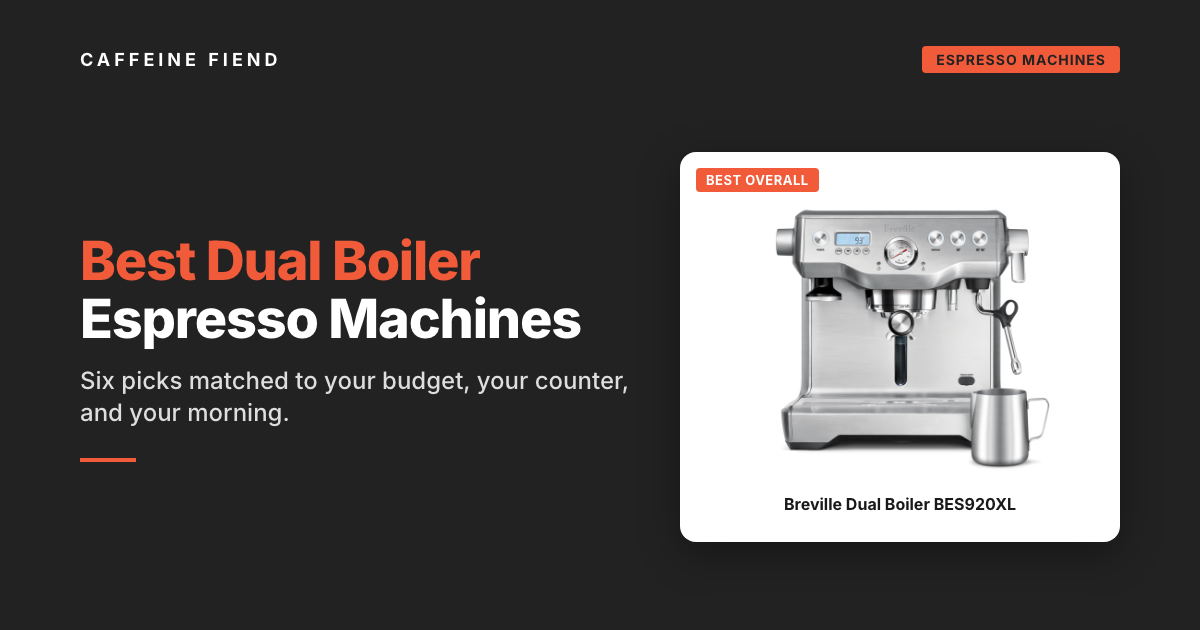
Our top overall pick is the Breville Dual Boiler BES920XL. It’s the cheapest defensible way to get simultaneous shot-and-steam without redesigning your counter or your morning around a prosumer machine.
Two boilers exist for one reason. You get to pull a shot and steam milk at the same time, with enough dedicated steam power to texture microfoam like a café. A well-pulled shot from a good single-boiler at 200°F and 9 bar tastes about the same as a $3,000 Bianca pulled at the same settings. What the second boiler buys is choreography between the pull and the milk. If you don’t pull milk drinks daily, an HX or high-end single-boiler is the smarter buy.
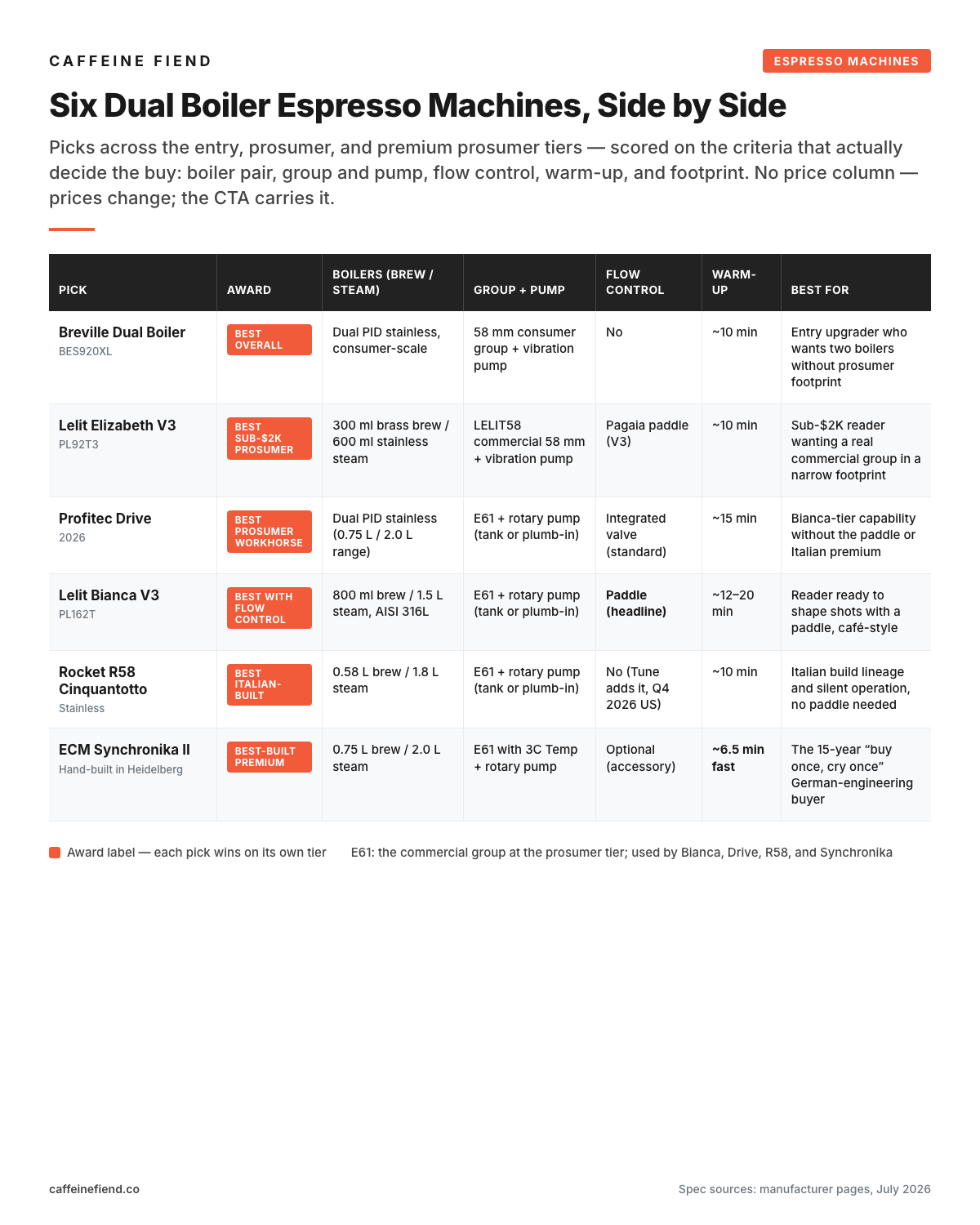
Dual Boiler Espresso Machines at a Glance
| Machine | Award | Boilers (brew / steam) | Group + Pump | Flow Control | Warmup | Footprint (W × D × H) | Best For |
|---|---|---|---|---|---|---|---|
| Breville Dual Boiler (BES920XL) | Best Overall (Entry Tier) | Dual PID stainless (consumer-scale) | 58 mm consumer group + vibration pump | No | ~10 min | 15.9 × 14.7 × 14.9 in | Entry upgrader who wants two boilers without prosumer footprint |
| Lelit Elizabeth V3 (PL92T3) | Best Sub-$2K Prosumer | 300 ml brass brew + 600 ml stainless steam | LELIT58 commercial 58 mm + vibration pump | Pagaia paddle (V3) | ~10 min | 12.6 × 15 × 15 in | Sub-$2K reader who wants a real commercial group in a narrow footprint |
| Profitec Drive | Best Prosumer Workhorse | Dual PID stainless (0.75 L / 2.0 L range) | E61 + rotary pump (tank or plumb-in) | Integrated valve (standard) | ~15 min | ~15 in wide | Bianca-tier capability without the paddle or the Italian premium |
| Lelit Bianca V3 (PL162T) | Best Prosumer with Flow Control | 800 ml brew + 1.5 L steam AISI 316L | E61 + rotary pump (tank or plumb-in) | Paddle (headline) | ~12–20 min | Wide E61 footprint | The reader ready to shape shots with a paddle, café-style |
| Rocket R58 Cinquantotto | Best Italian-Built Prosumer | 0.58 L brew + 1.8 L steam | E61 + rotary pump (tank or plumb-in) | No (Tune adds it, Q4 2026 US) | ~10 min | ~13 × 19 × 17 in | Italian build lineage, silent operation, no paddle needed |
| ECM Synchronika II | Best-Built Premium Prosumer | 0.75 L brew + 2.0 L steam | E61 with 3C Temp + rotary pump | Optional (accessory) | ~6.5 min fast | Wide E61 footprint | The 15-year “buy once, cry once” German-engineering buyer |
How We Picked
Dual boiler covers a 2x price range and the tiers behave like different products, so we picked one machine at each tier rather than force-ranking a $1,600 machine against a $3,500 one. Cliff & Pebble’s under-$3K editorial names four picks; we add the entry tier below and the premium tier above to give you the full map.
We built the shortlist from four criteria.
- Real dual-boiler architecture. Two separate boilers, not a thermoblock, not a heat exchanger, not a ThermoJet. This ruled out a couple of machines Breville markets adjacent to the tier, the Oracle Jet BES985 chief among them (more on that below).
- 9-bar extraction under a real workflow. The Specialty Coffee Association’s espresso brewing standard sits at 9 ± 1 bar, 195–205°F, 20–30 seconds. Every pick reaches it through an OPV; the 15-bar and 20-bar pump numbers on the box are headroom, and the OPV brings pressure at the puck back to 9 bar.
- Steam-boiler power for actual milk work. Steam pressure and boiler size decide whether you can pull four back-to-back cappuccinos on a Saturday morning without the machine stalling.
- Availability and lifespan. Every pick is still being sold as of July 2026 with a live retailer link. Discontinued or superseded machines got cut or replaced with the current-generation successor.
We haven’t put fresh hands-on time on all six for this piece. Picks reflect our own experience with the tier plus long-form reviews from named reviewers who did: Julia Bobak at Home Grounds on the BDB, Aleksandar Spasevski at Coffeedant on the Pro 700 and Synchronika, Arne Preuss at Coffeeness on the R58, and Marc Buckman at Whole Latte Love on the Pro 700 steam architecture.
The Best Dual Boiler Espresso Machines
Best Overall: Breville Dual Boiler (BES920XL)
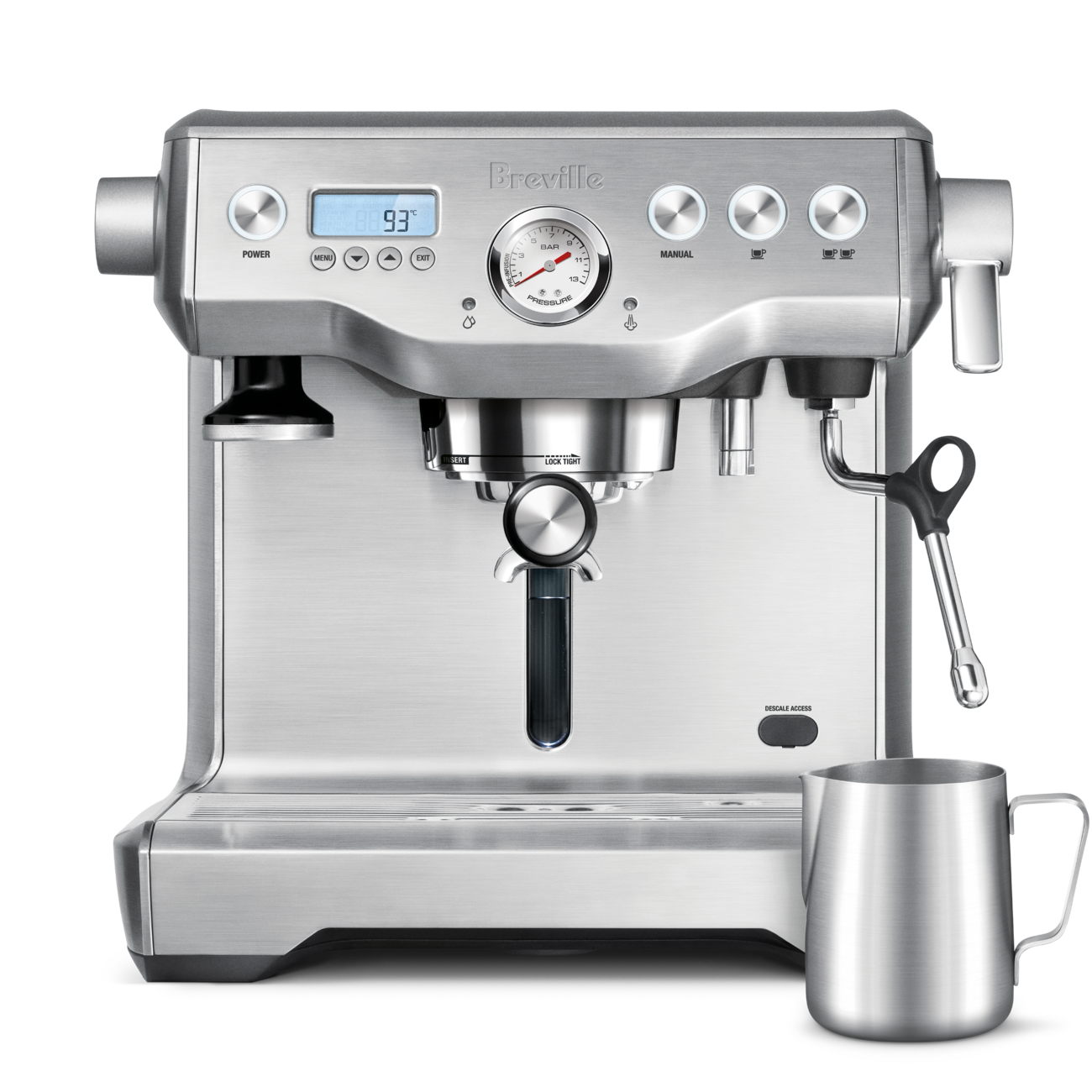
Verdict. The Breville Dual Boiler BES920XL is the cheapest defensible dual-boiler machine on the market. PID on both boilers, a PID-controlled heated group head, simultaneous brew and steam, and Breville’s 58 mm commercial portafilter (the same group size the prosumer tier uses). Home Grounds’ Julia Bobak measured less than 1°F of fluctuation and 10 minutes to ready. The prosumer floor for the same architecture starts around $2,500; the BDB delivers the feature list at close to half the price.
Pros:
- The workflow unlock at the entry tier. Pull a shot and steam milk at the same time; PID on both boilers holds the water where you want it.
- 58 mm commercial portafilter. Steps you up from a Bambino Plus’s 54 mm basket into the ecosystem every prosumer machine on this list shares. The full best coffee tampers inventory works here.
- Low-pressure pre-infusion built in. A gentler soak up front that retailers charge more for elsewhere.
- Fits under standard cabinets. 14.9 in tall clears the 18 in countertop-to-cabinet clearance most kitchens work with.
Cons:
- Consumer-appliance build with a consumer durability curve. Home Grounds flags a realistic five-year lifespan versus decades on a prosumer machine.
Best for. The reader upgrading from a Bambino Plus, a Barista Express, or a Gaggia Classic Pro who wants two boilers at the lowest defensible price and is fine trading prosumer lifespan for tier savings.
Evaluation basis. Research-grade at Caffeine Fiend; Julia Bobak’s Home Grounds hands-on carries the primary signal.
Best Sub-$2,000 Prosumer: Lelit Elizabeth V3 (PL92T3)
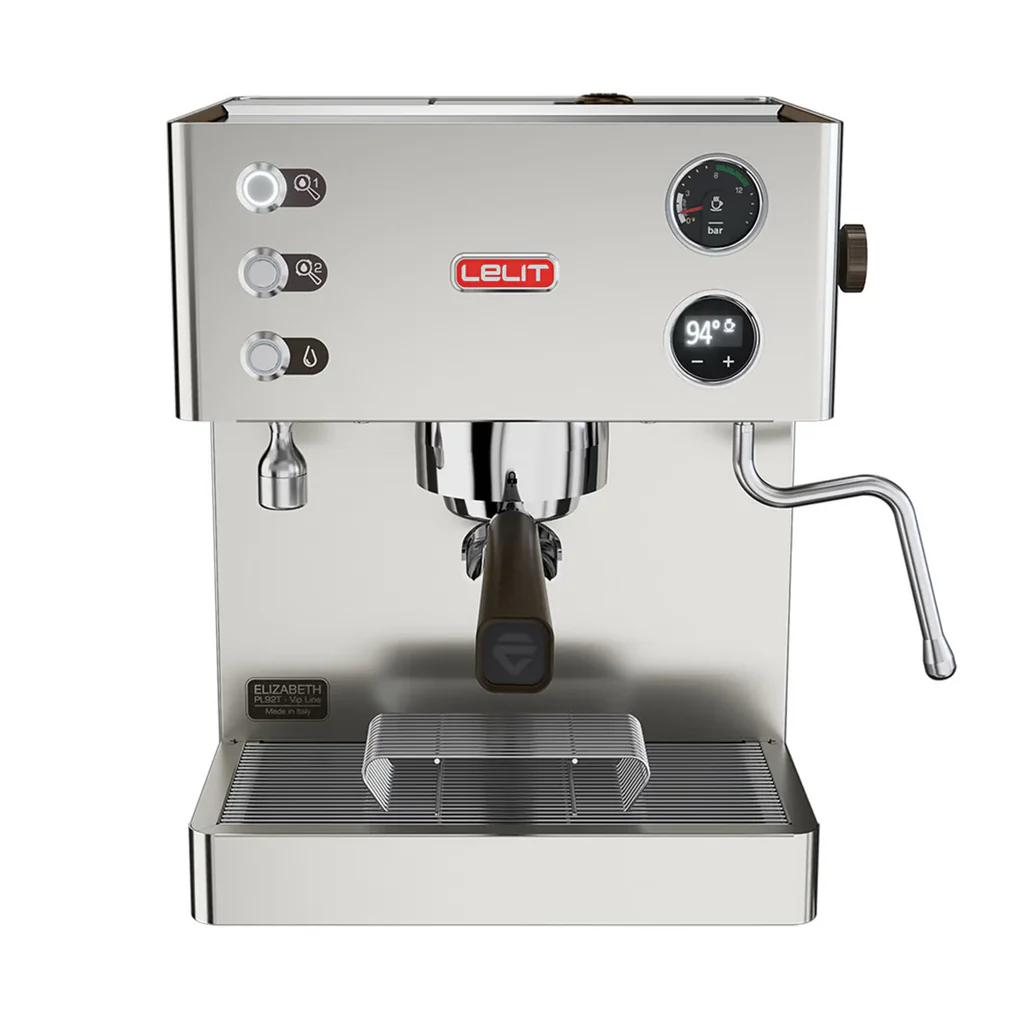
Verdict. The Lelit Elizabeth V3 is where the dual-boiler category first delivers a real commercial group at a sub-$2,000 price. A 300 ml brass brew boiler, a 600 ml stainless steam boiler, Lelit’s LELIT58 commercial 58 mm group, programmable pre-infusion and brew time, and a three-way solenoid that drops dry pucks the way a café’s does. The V3 update adds the Pagaia paddle: pressure profiling in a tier that never had it. Cliff & Pebble names it the only sub-$2K pick on their under-$3,000 shortlist. At 12.6 inches wide, it’s materially narrower than any E61 machine here.
Pros:
- Commercial 58 mm group at sub-$2K. Same aftermarket ecosystem the prosumer tier above shares.
- Programmable pre-infusion and brew time. Shot-shaping controls the Breville BDB doesn’t have.
- Pagaia paddle on the V3. Paddle-driven pressure profiling at a price where, until this year, the answer was “save another thousand dollars.”
- Narrow footprint. Fits kitchens that a Bianca or a Drive won’t.
Cons:
- Small steam boiler. 600 ml is fine for two milk drinks; it feels tight for a household pulling four back-to-back cappuccinos, where the Bianca’s 1.5 L or the Drive’s 2 L don’t stall. You’re trading steam headroom for footprint and price at this tier.
Best for. The reader who wants a real dual-boiler prosumer machine with a hard $2,000 ceiling and no room for an E61 rig.
Evaluation basis. Thinnest evidence base of the six picks; Cliff & Pebble’s editorial verdict and Lelit’s spec sheet, no review-farm hands-on to lean on.
Best Prosumer Workhorse: Profitec Drive
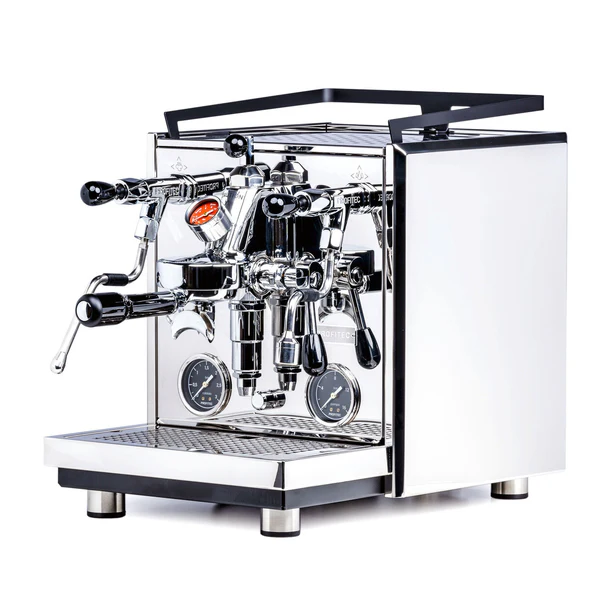
Verdict. The Profitec Drive is what you buy when you want everything the Bianca offers but prefer German build over Italian and OLED over analog. It’s the 2026 successor to the Pro 700, and it closes the gap that made the Pro 700 feel one accessory short: flow control is standard on the Drive, where the Pro 700 needed a separate paddle purchase. Marc Buckman at Whole Latte Love clocked the Pro 700’s steam architecture (which the Drive inherits) at 2 bars of pressure, 20 seconds to steam 6 ounces of milk, and 6-second boiler recovery. Aleksandar Spasevski at Coffeedant named dual-PID stability as the Pro 700’s recurring pro and missing flow control as the recurring con. The Drive closes it.
Pros:
- Dual PID stainless boilers. Same architecture as the Bianca and the Synchronika.
- E61 with integrated flow control standard. Real shot-shaping without a separate accessory.
- Best-in-class steaming. 2-bar steam boiler pressure inherited from the Pro 700.
- Rotary pump, tank or plumb-in. Quieter and longer-lived than the vibration pumps at the tier below.
Cons:
- No paddle. The Drive’s flow control is a needle-valve twist rather than a Bianca-style paddle. Same underlying capability, less tactile, less theatrical. If you want to feel the flow-control adjustment during the shot, you want the Bianca.
Best for. The reader shopping the Bianca who quietly likes German engineering more than Italian brand halo.
Evaluation basis. Strong. Drive inherits Pro 700 architecture (Whole Latte Love, Coffeedant); Profitec’s product page confirms flow control is now standard.
Best Prosumer with Flow Control: Lelit Bianca V3 (PL162T)
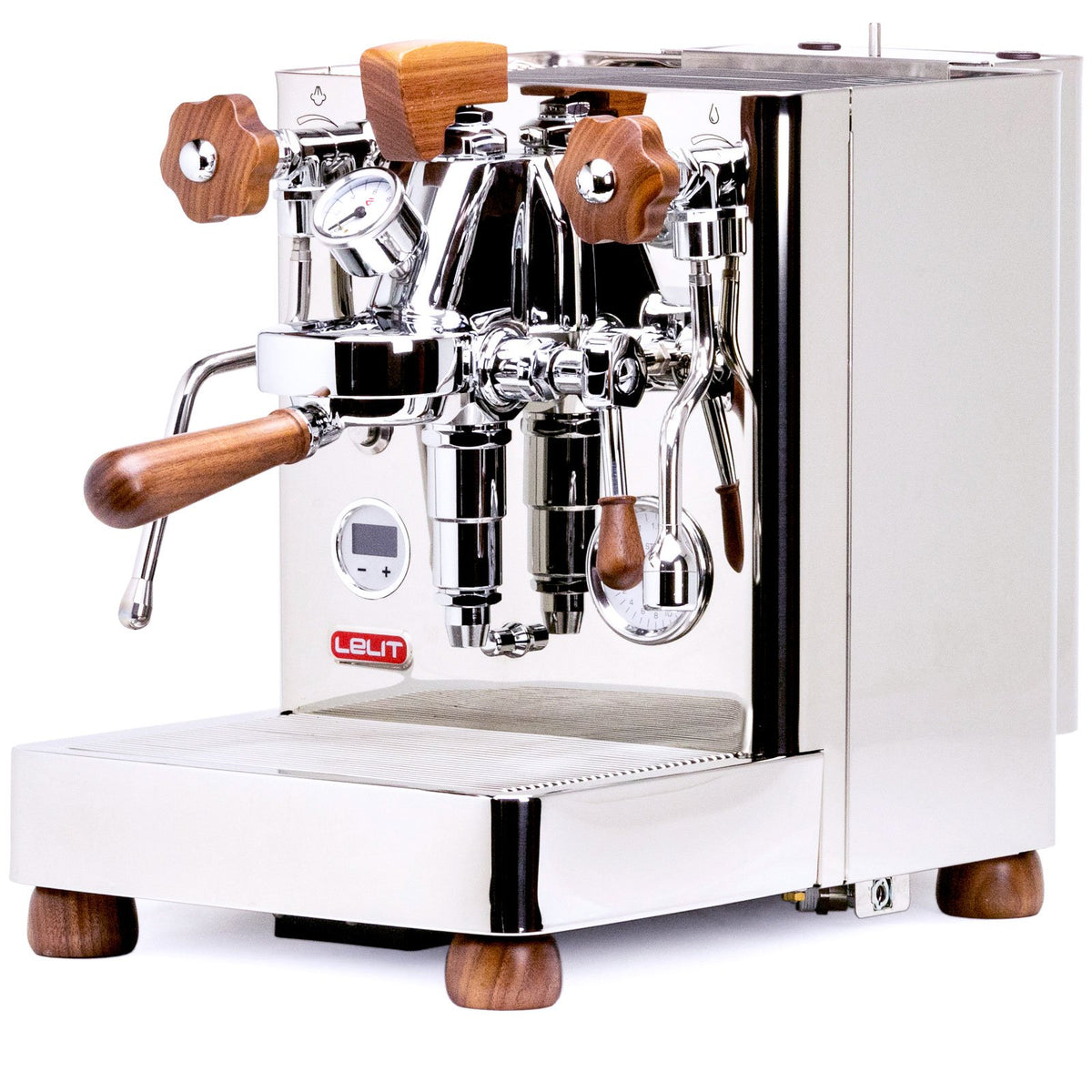
Verdict. The Lelit Bianca V3 is the pick if you want to shape shots with a paddle and you know you’ll actually use it. Real flow profiling is normally a $5,000-plus commercial feature; the Bianca lands it at sub-$3,000. We covered the full Bianca thesis on our best espresso machine for home roundup, so the short version: 800 ml brew boiler, 1.5 L steam boiler, E61 group, rotary pump, and the paddle that makes flow control the reason you’re spending.
Pros:
- Flow-control paddle at sub-$3K. The whole reason this machine exists at this price.
- Big brew boiler. 800 ml gives tighter recovery on back-to-back shots than the smaller-boiler picks.
- Rotary pump. Quieter and longer-lived than the vibratory pumps at the entry tier.
Cons:
- Big footprint and a real learning curve. Not a first machine. Full thermal stability wants roughly 20 minutes, so a $3,000 machine can end up serving fewer weekly shots than the $500 single-boiler it replaced if the reader brews reactively. If you’re buying it because you want to be a tinkerer, that’s the guitar-to-guitarist bet; it happens, it mostly doesn’t end with a guitar player. Owners solve the warmup problem with a $15 scheduled smart plug we already recommend on the pillar page.
Best for. The reader with 200-plus shots on a Gaggia Classic Pro or similar, comfortable with grind adjustments, ready to shape shots with a paddle instead of accepting whatever the machine gives them.
Evaluation basis. Highest-evidence pick in the roundup, banked from the pillar page’s Home Grounds hands-on.
Best Italian-Built Prosumer: Rocket R58 Cinquantotto
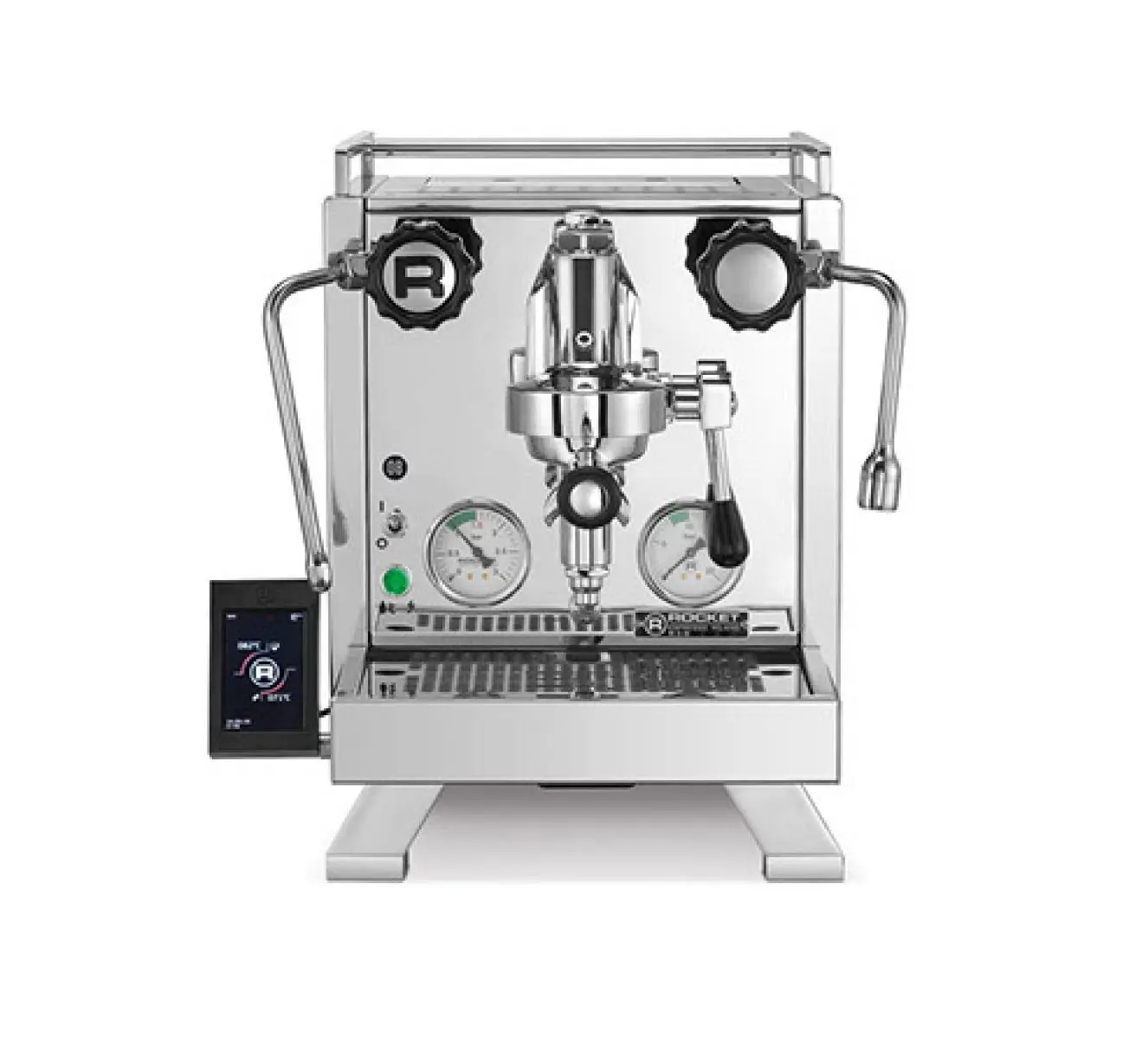
Verdict. The Rocket R58 Cinquantotto is the pick if you want Italian commercial-tier build lineage at a price that undercuts the German ECM and Profitec tier. The 58 in the name is the 0.58 L brew boiler; the 1.8 L steam boiler and dual PID controllers deliver the tier’s temperature stability, and the rotary pump runs on tank or plumb-in with quiet operation that matters at 6 a.m. Coffeeness’s Arne Preuss called dual PIDs “a commercial-grade feature that enables simultaneous espresso pulling and milk steaming,” and clocked a shot at “around 9 bar during extraction … 21 grams … 20 to 25 seconds,” right on the SCA target.
The incoming R58 Tune adds programmable pressure profiling on a magnetically-mounted 3.5-inch touchscreen, Rocket’s answer to the Bianca paddle. It won’t hit US retail until Q4 2026 per Sprudge; until then, the Cinquantotto is the buyable pick.
Pros:
- Hand-built in Italy at a lower price than ECM or Profitec. Same E61-plus-dual-boiler-plus-rotary architecture, less badge premium.
- Silent operation. No standing there watching a pressure gauge like it owes you money.
- Dual PID stainless boilers. Commercial-grade temperature stability supporting pull-plus-steam without the two loops fighting each other.
Cons:
- No on-machine flow control. The Cinquantotto is the plain-vanilla E61 rotary-pump prosumer. Preuss also names the roughly $3,000 barrier to entry as the main constraint for home buyers. If paddle-driven flow profiling matters, go Bianca today, or wait for the Tune’s programmable profiling in Q4 2026.
Best for. The reader who values Italian construction and silent operation over paddle theater and doesn’t need on-machine flow control to feel like $3,000 was well spent.
Evaluation basis. Arne Preuss’s Coffeeness hands-on carries the shot-pull observation and the temperature-stability call.
Best-Built Premium Prosumer: ECM Synchronika II
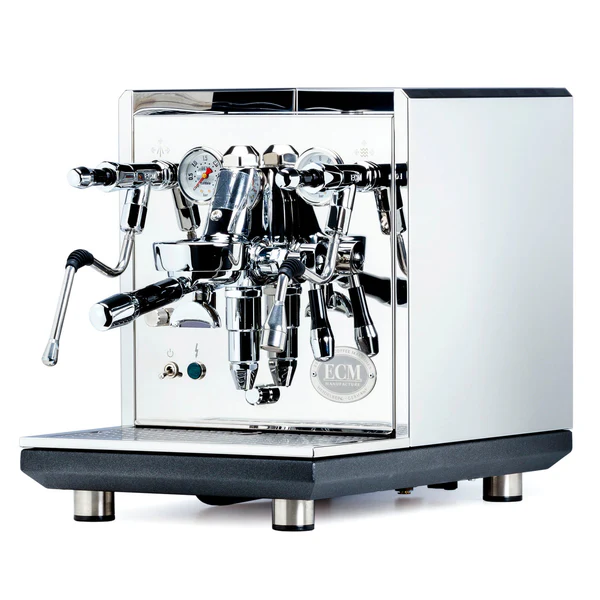
Verdict. The ECM Synchronika II is a “buy once, cry once” machine you’re keeping for 15 years. Hand-built in Heidelberg. Dual PID stainless boilers (0.75 L brew, 2.0 L steam, the largest in the roundup, tied with the Drive). E61 group with ECM’s 3C Temp technology for shorter warmup than a plain E61. Rotary pump with a 2.8 L reservoir and plumb-in, 2 bars of steam pressure. Aleksandar Spasevski at Coffeedant put a number on the warmup: “the machine reaches shot-ready status in 6.5 minutes via fast mode, but full balance across all components requires additional time during extended use.”
Pros:
- German build quality. Hand-built in Heidelberg; the value-per-year math is the case for spending here.
- 3C Temp E61. Extra heating cartridges in the group give the shortest warmup in the roundup, 6.5 minutes via fast mode.
- Largest steam boiler in the roundup. 2 L handles heavy back-to-back milk work without recovery lag.
- Rotary pump with plumb-in. Café-tier water routing options.
Cons:
- Flow control is an extra purchase. Manual flow profiling requires the optional ECM Flow Profile Valve accessory. The Bianca and the Drive both ship flow control standard at this tier, which stings on a machine that’s already premium-priced.
Best for. The reader whose objection to the Bianca isn’t the price but the paddle, and who considers this a 15-year commitment.
Evaluation basis. Coffeedant’s hands-on with the warmup measurement and the note that “perfect thermal equilibrium still benefits from extra heat-soak on long sessions.”
What Dual Boiler Actually Unlocks (And What It Doesn’t)
The category’s marketing wants you to believe two boilers make espresso taste better. They don’t. Two boilers exist to solve an ergonomics problem.
Simultaneous Shot-and-Steam Is the Workflow Win
A single-boiler machine heats water to brew temperature (around 200°F) or steam temperature (around 265°F), one at a time. A dual boiler runs both loops at their own set points, so you pull the shot with your right hand while you’re texturing milk with your left. If you make lattes or cappuccinos daily, that choreography is the reason to spend more.
Steam-Boiler Power Is What Textures Real Milk
A dedicated steam boiler with 1.5 to 2 L of capacity and 2 bars of pressure textures microfoam like a café’s does. A single-boiler thermoblock can’t sustain that. If you don’t pull milk drinks, this feature is dead weight.
The Two-Tier Map of the Dual Boiler Category
“Dual boiler” spans two very different products sharing one search term. At the entry tier, the Breville BDB puts two boilers in a consumer appliance at roughly $1,600, with a five-year lifespan per Home Grounds. At the prosumer tier (roughly $2,500 to $4,000: Bianca, Drive, Synchronika, R58), you’re buying an E61 group, brass boilers with real thermal mass, a rotary pump, and a three-way solenoid. The E61 is a public-domain Faema design from 1961 that Bezzera, Profitec, ECM, Rocket, and Lelit all use. That’s where the “dual boiler” label stops being a feature bullet and starts being a machine built the way a café’s is.
Footprint, Warmup, and Cleaning Are the Real Trade-offs
A prosumer E61 dual boiler wants 15 to 20 minutes to hit thermal stability, a 12- to 15-inch swath of counter, and a backflush routine your Bambino Plus never asked for. We’ve watched a $2,500 prosumer rig stay dark from Wednesday to Sunday three weeks running while the household made instant in a French press because the warmup felt like too much before work. The $15 smart-plug-on-a-schedule workaround is a real fix; assume you’ll need it.
The Oracle Jet Isn’t a Dual Boiler
Breville markets the Oracle Jet BES985 adjacent to this tier, but it uses a ThermoJet single-boiler-equivalent architecture with a heated group head. Fine machine on its own terms; just not what a “dual boiler” search is looking for. If you want the Oracle workflow with actual dual boilers, the current-gen Oracle Dual Boiler BES996 is the correct successor to the discontinued Oracle Touch. For the all-in-one with a built-in grinder, our espresso machine with grinder roundup covers that path.
So Which Dual Boiler Should You Buy?
Upgrading from a Bambino Plus, a Barista Express, or a Gaggia Classic Pro and want two boilers at the lowest defensible price? Buy the Breville Dual Boiler BES920XL.
Hard $2,000 ceiling with a real commercial group? Lelit Elizabeth V3 is the honest sub-$2K prosumer pick.
200 shots through a Classic Pro and ready for a paddle? Lelit Bianca V3.
Bianca capability with German engineering and no brand premium? Profitec Drive.
Italian build lineage and silent operation, no flow control needed today? The Rocket R58 Cinquantotto, with the caveat that Rocket’s R58 Tune update lands in the US in Q4 2026 if paddle-adjacent profiling matters.
Keeping the machine for 15 years? The ECM Synchronika II is the German-engineering play.
Whichever pick matches your morning, budget for a grinder and, if you’re on the prosumer tier, the $15 smart plug that turns a Tuesday morning back into a two-minute pull. As James Hoffmann puts it, “your grinder will make more difference to your coffee than any other piece of equipment you own.” Five of the six picks ship without one; plan on $200 to $500 for a decent single-dose burr.
Frequently Asked Questions About Dual Boiler Espresso Machines
Is a dual boiler espresso machine worth it?
It’s worth it if you pull milk drinks daily. Two boilers exist so you can pull a shot and steam milk at the same time, and so the steam boiler has enough dedicated pressure to texture microfoam like a café. If your daily brew is straight espresso, a dual boiler is spending $1,500 to $4,000 on a feature you’ll rarely touch. A high-quality single-boiler or an HX pulls the same shot at roughly half the price.
What is a dual boiler in an espresso machine?
A dual boiler machine runs two separate boilers at two set points: a brew boiler around 200°F for extraction and a dedicated steam boiler around 250 to 260°F for milk, both held live at once. A single-boiler machine switches between the two with a wait cycle or a cool-down flush; a heat-exchanger (HX) uses one boiler at steam temp and pulls brew water through a coil that passes through it. Dual boiler is the architecture that keeps both loops independent.
What is the cheapest dual boiler espresso machine?
The cheapest true dual boiler we’d recommend is the Breville Dual Boiler BES920XL, at roughly $1,600. Below that price, machines marketed as “dual boiler” use one boiler plus a thermoblock, a heat exchanger, or a ThermoJet element, and those don’t deliver the simultaneous shot-and-steam workflow the category is known for. Lelit’s Elizabeth V3 is the next real dual boiler up at around $1,800.
Is a dual boiler good for beginners?
Yes for a total beginner making lattes daily; no for a total beginner buying at the prosumer tier. A beginner who wants lattes every morning has a materially easier time on a dual boiler than on a single-boiler machine switching between brew and steam. No wait cycle, no cool-down flush, milk texturing closer to café quality out of the box. Where a dual boiler is the wrong pick for a beginner is the prosumer tier: an E61 rig with a 20-minute warmup, a backflush routine, and a paddle you don’t yet know how to use will sit cold most weeks. Start on a Bambino Plus, a Barista Express, or a Gaggia Classic Pro (see our beginner espresso machines roundup), put 200 shots through it, then buy the dual boiler you earned the vocabulary for. Our how to make espresso walkthrough covers the fundamentals.
What is the price range for dual boiler espresso machines?
Roughly $1,500 to $7,000 for a home dual boiler. Entry sits around $1,500 to $1,800 (Breville Dual Boiler, Lelit Elizabeth V3). The prosumer sweet spot is $2,500 to $4,000 (Bianca, Drive, R58, Synchronika). Above $4,000 you’re into the luxury tier and boutique brands.