
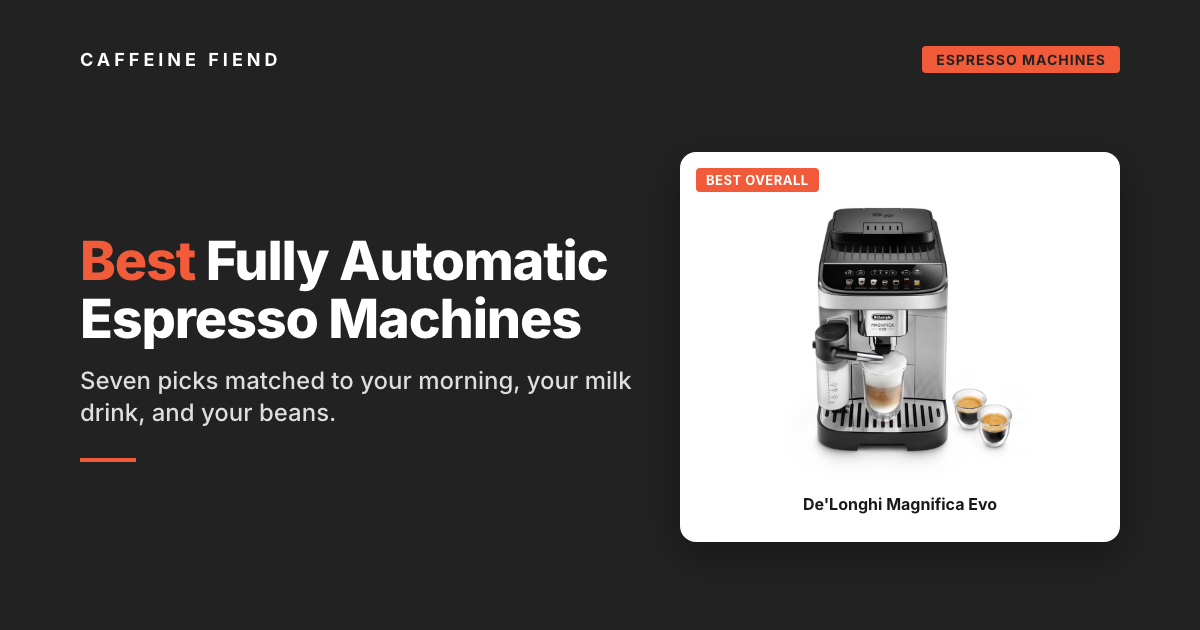
If you want café-quality espresso drinks every morning without turning your kitchen counter into a barista training station, a fully automatic espresso machine is the right buy. You load beans, load water, hit a button, and the machine grinds, doses, tamps, brews, and (if it has a milk system) froths for you.
Our top pick for most home buyers is the De’Longhi Magnifica Evo. It clears the daily-use bar better than anything else at the sweet-spot price, and the LatteCrema Hot milk carafe delivers competent foam without steam-wand skill.
But the Evo isn’t the right buy for everyone. If milk cleanup is what would kill your enthusiasm for a super-auto, the Philips 3200 LatteGo wins. If you run two beans in rotation, the De’Longhi Rivelia solves a hopper-staleness problem this whole category otherwise has by design. If your primary drink is a real cappuccino, the Jura E8 pours the closest-to-café microfoam in the roundup.
The Best Automatic Espresso Machines at a Glance
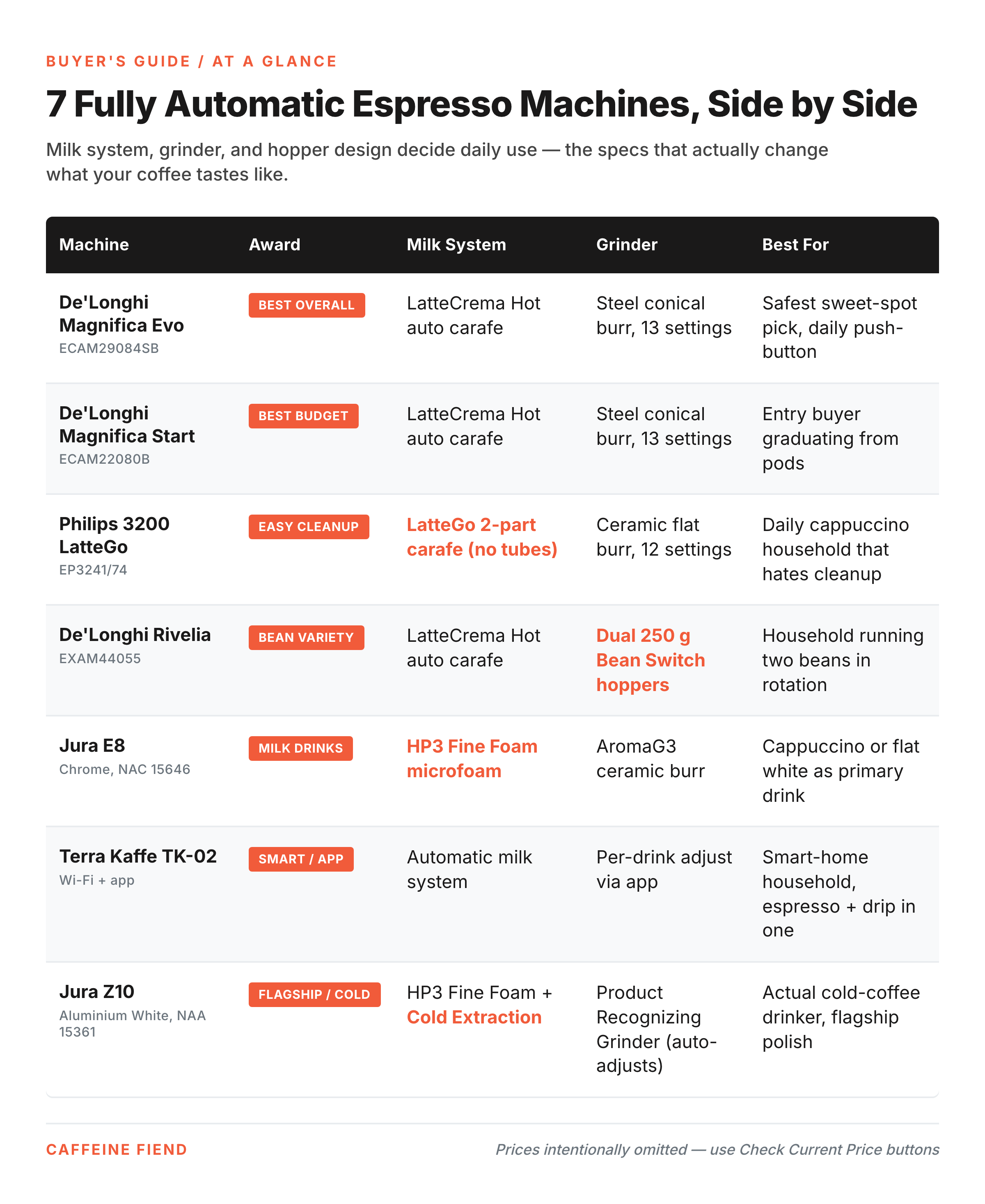
| Machine | Award | Milk System | Grinder | Best For |
|---|---|---|---|---|
| De’Longhi Magnifica Evo | Best Overall | LatteCrema Hot auto carafe | Steel conical burr, 13 settings | Safest sweet-spot pick, daily push-button |
| De’Longhi Magnifica Start | Best Budget | LatteCrema Hot auto carafe | Steel conical burr, 13 settings | Entry buyer graduating from pods |
| Philips 3200 LatteGo | Best for Easy Cleanup | LatteGo 2-part carafe, no tubes | Ceramic flat burr, 12 settings | Daily cappuccino household that hates cleanup |
| De’Longhi Rivelia | Best for Bean Variety | LatteCrema Hot auto carafe | Steel burr, 13 settings, dual hopper | Household running two beans in rotation |
| Jura E8 | Best for Milk Drinks | HP3 Fine Foam (no carafe included) | AromaG3 ceramic burr | Cappuccino / flat white as your primary drink |
| Terra Kaffe TK-02 | Best Smart / App-Driven | Automatic milk + Wi-Fi app | Integrated burr, per-drink adjust | Smart-home household, espresso + drip in one |
| Jura Z10 | Best Flagship / Cold Coffee | HP3 Fine Foam + Cold Extraction | Product Recognizing Grinder (auto-adjusts) | Cold-coffee drinker, flagship polish |
No price column. Amazon prices move too fast for a table to stay honest, and the “Check Current Price” button under each pick has the live number.
How We Picked
We’re going to be straight about this. We evaluated these seven machines through hands-on testing summaries from long-term reviewers we trust, manufacturer specs verified against current SKUs, and owner-review consensus. That’s not the same as pulling 2,800 drinks over eight months on each machine ourselves, and where we lean on someone else’s long-term test, we name them: Tom’s Coffee Corner’s three-month, 190-shot review of the Magnifica Evo; Coffeeness’s Rivelia hands-on; The Tested Hub’s eight-month, ~2,800-drink Jura E8 evaluation; Tom’s Guide, Coffeeness, and InsideHook on the Terra Kaffe TK-02.
The criteria that decided the picks:
- Milk system architecture and foam quality. Steam-wand cachet doesn’t matter to most home users. What matters is how good the milk is out of the auto-frother the machine actually has.
- Built-in grinder quality. Burr type, resolution, and cooling all show up in the cup. The grinder is half the shot.
- Daily maintenance. The auto-clean cadence and how easy the milk system is to rinse are the difference between a five-year machine and one that lives in a closet after six months.
- Bean workflow. A super-auto with a big single hopper penalizes buyers who care about fresh beans. Small top-ups beat a loaded hopper every time.
- Cabinet clearance. Standard countertop-to-upper-cabinet clearance is 18 inches, and every full-size super-auto ships close to that. We flag it per pick where it matters.
We cut picks that didn’t earn a defended slot.
De’Longhi Magnifica Evo — Best Overall
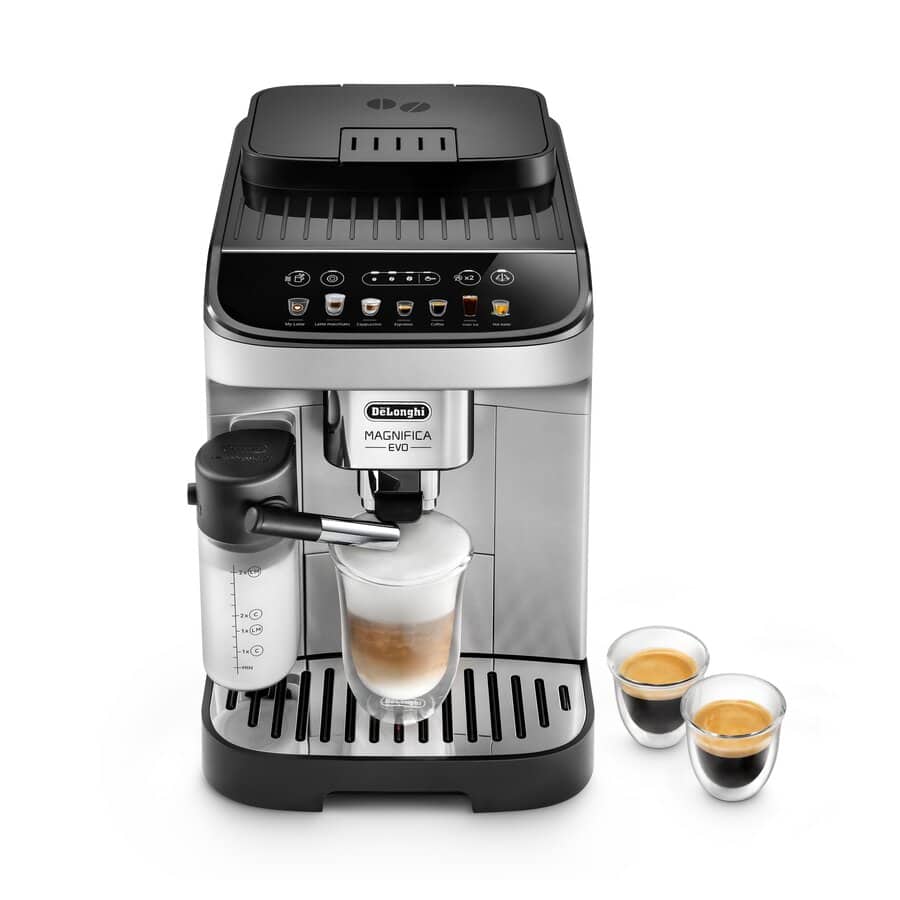
The verdict: the safest sweet-spot super-auto around the $800 mark, with the LatteCrema Hot carafe, an auto-clean cadence you’ll actually keep up with, and a track record long enough to trust.
Best for: the buyer who wants daily push-button espresso plus one-touch milk drinks, no technical learning curve, and doesn’t want to spend more than the tier requires.
The Evo is our incumbent super-auto pick for a reason. Tom’s Coffee Corner’s three-month test with 190-plus shots pulled landed on the same verdict shorter evaluations do. Consistently good bean-to-cup espresso, an easy daily workflow, and a maintenance cadence home users actually follow. That last part is the reliability moat. A super-auto that gets descaled is a five-year machine; one that doesn’t is a two-year machine. The LatteCrema Hot carafe delivers competent auto-frother foam that lands without technique, and the carafe clicks in and out for cleaning without ceremony.
Pros:
- Long-term reliability record. Multi-month reviewers keep landing on the same verdict. Solid espresso, easy workflow, maintenance that gets done.
- LatteCrema Hot foam is genuinely competent. Better than most auto-frothers in the tier, and honest about being auto-frother foam, not café microfoam.
- 13-setting steel conical burr grinder. Enough resolution for medium and medium-dark roasts.
- Fits under standard 18-inch cabinet clearance. At 14.17 inches tall, it slots into most kitchens without a rethink.
- Auto-clean cycle nags you into descaling. The reliability difference between owners who follow through and owners who don’t.
Cons:
- The grinder is loud. Reviewers measure it around 78 decibels (vacuum-cleaner territory) during its 5- to 7-second cycle. If the kitchen shares a wall with a bedroom, you’ll notice.
- Shallow drink menu vs. higher tiers. Seven one-touch drinks, vs. 17 on the Jura E8 and 40 on the Z10. If you want granular customization, this isn’t the tier.
- Light-roast performance is a compromise. True of most bean-to-cups. Worth naming honestly.
If you own an entry-level pod machine and want the next real step up in espresso without the ritual, this is the one. It’s our top espresso machine pick for the friend who wants a super-auto and doesn’t want a long conversation about it.
De’Longhi Magnifica Start (LatteCrema) — Best Budget
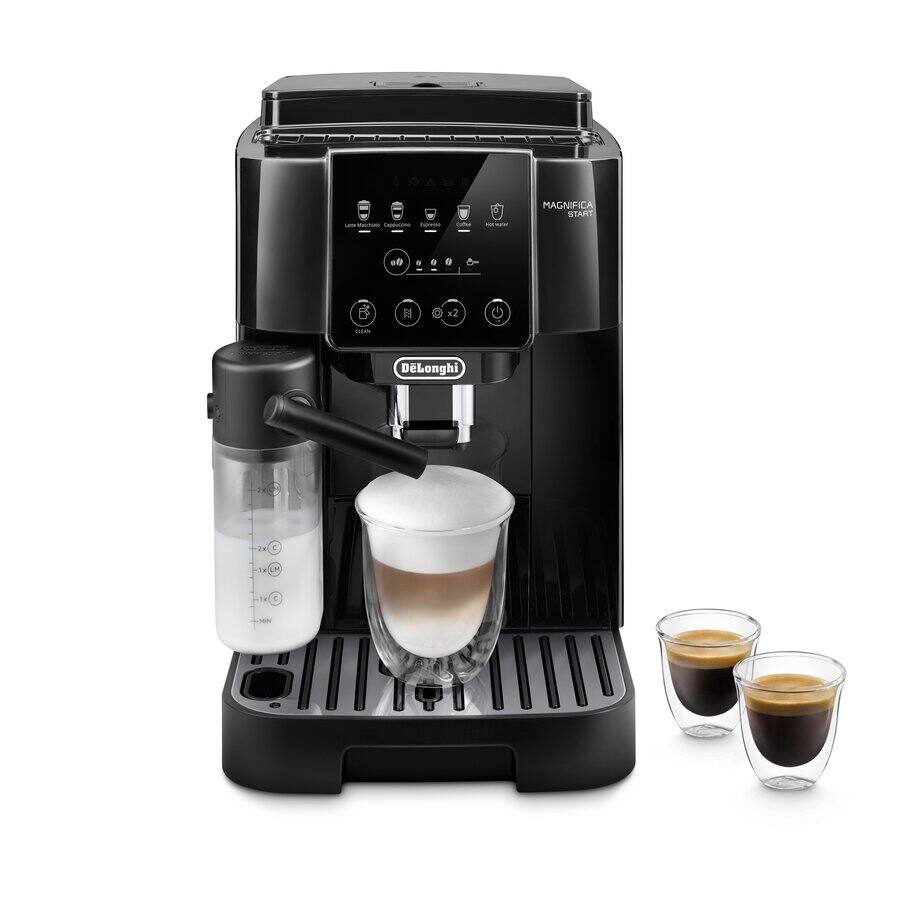
The verdict: the cheapest defensible way into an automatic espresso machine with one-touch milk. Same milk hardware family as the Evo, in a smaller footprint, about a hundred fifty dollars cheaper.
Best for: the reader graduating from a pod machine, or the guest-suite / office setup, who wants push-button espresso and cappuccino at the entry price without stepping down to a manual frother.
The De’Longhi Magnifica Start isn’t a stripped-down Magnifica in the ways that count. The LatteCrema Hot milk carafe is the same hardware family as the Evo, the grinder is the same 13-setting conical burr, and the on-machine UI is one of the easiest of any Magnifica to learn. Tom’s Coffee Corner calls it “excellent midranged.” Coffeedant’s honest verdict, “convenience over craftsmanship at this price,” is the one we’d echo. The plastics feel plastic-ier than the Evo, and the price gap between them is smaller than it feels in the cup once you’ve drunk from both.
Pros:
- Simplest daily workflow in the entry tier. LatteCrema Hot auto-frother, five one-touch drinks, no learning curve.
- Same milk hardware family as the Evo. You’re not stepping down on the milk system. You’re stepping down on the drink menu and the build.
- Compact footprint. Sits under standard cabinets and doesn’t crowd a small kitchen.
- Auto-clean cycle included. The reliability moat isn’t reserved for the higher tiers.
Cons:
- Build feels plastic-ier than the Evo. Not a dealbreaker at the price, but you’ll notice on the buttons and the drip tray.
- Shallow drink menu. Five one-touch beverages. If you want iced coffee or long-coffee variety, look higher up.
- Fewer practical grind steps than the marketing suggests. Reviewers note the meaningful resolution is coarser than the 13-position label promises. Owners chasing light-roast single-origins outgrow it faster than expected.
Side by side, the Start and the Evo look almost identical in a photo. In use, the Evo does more, does it more solidly, and rewards a longer runway. Buy the Start if the Evo is out of budget; buy the Evo if it isn’t.
Philips 3200 LatteGo — Best for Easy Cleanup
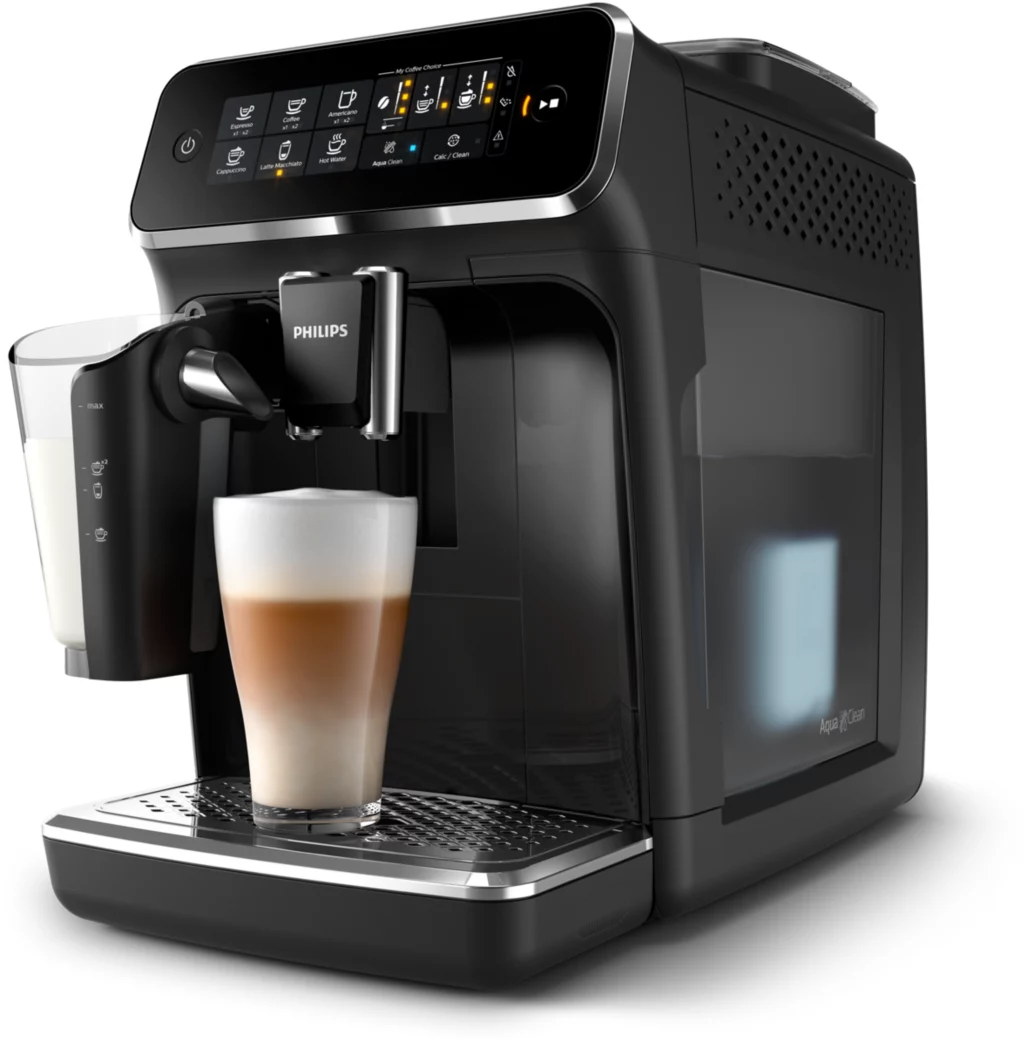
The verdict: the daily-cappuccino machine for the household that already knows milk cleanup is why they’d stop using a super-auto. The LatteGo carafe is two parts, snaps apart, and rinses under the tap in about fifteen seconds. No tubes, nothing to clog.
Best for: the buyer honest with themselves that cleaning workflow is what decides whether a machine gets used or shelved.
The Philips 3200 LatteGo sits in the same tier as the Magnifica Evo but plays a different hand. The 100% ceramic flat burr grinder produces a subtly different tonal signature than De’Longhi’s steel conicals, a bit cleaner in the cup. AquaClean filtration extends the descale interval up to 5,000 cups if you replace the filter on cadence. The brew group pops out for a rinse under the tap.
The LatteGo carafe is the reason to pick this one. Coffeedant calls it “the easiest daily cappuccino machine with sink-simple milk cleanup,” and that’s the whole verdict on a super-auto’s daily viability. A milk carafe that annoys you to clean gets skipped after a week; a two-part carafe that rinses in fifteen seconds keeps you honest.
Pros:
- LatteGo is the easiest auto-frother to clean in the category. Two parts, no tubes, snap apart, done.
- Ceramic flat burr grinder. Runs cooler than steel at speed, less bean oxidation, subtly cleaner cup.
- AquaClean filter runs long between descales. Up to 5,000 cups with on-cadence replacement.
- Removable brew group. Rinses under the tap for real hygiene, not just a cycle.
Cons:
- Milk output runs cooler than the Philips 4300. About 138–140°F on the 3200 vs. 142–145°F on the 4300. You’ll notice on a latte.
- Drink menu is thin. Five one-touch recipes, no user profiles, no coffee-strength equalizer. If you want either, spend up for the 4300.
- LatteGo foam isn’t microfoam. Thick and light, clean-tasting, but not the silky pour a proper steam wand produces.
If milk temperature and user profiles matter to you, the 4300 LatteGo is the same core hardware with a hotter carafe and a nicer TFT display, and it’s worth the price step at the top of this tier. But the 3200 is the machine to buy if easy cleanup is why you’re in the market at all.
De’Longhi Rivelia — Best for Bean Variety
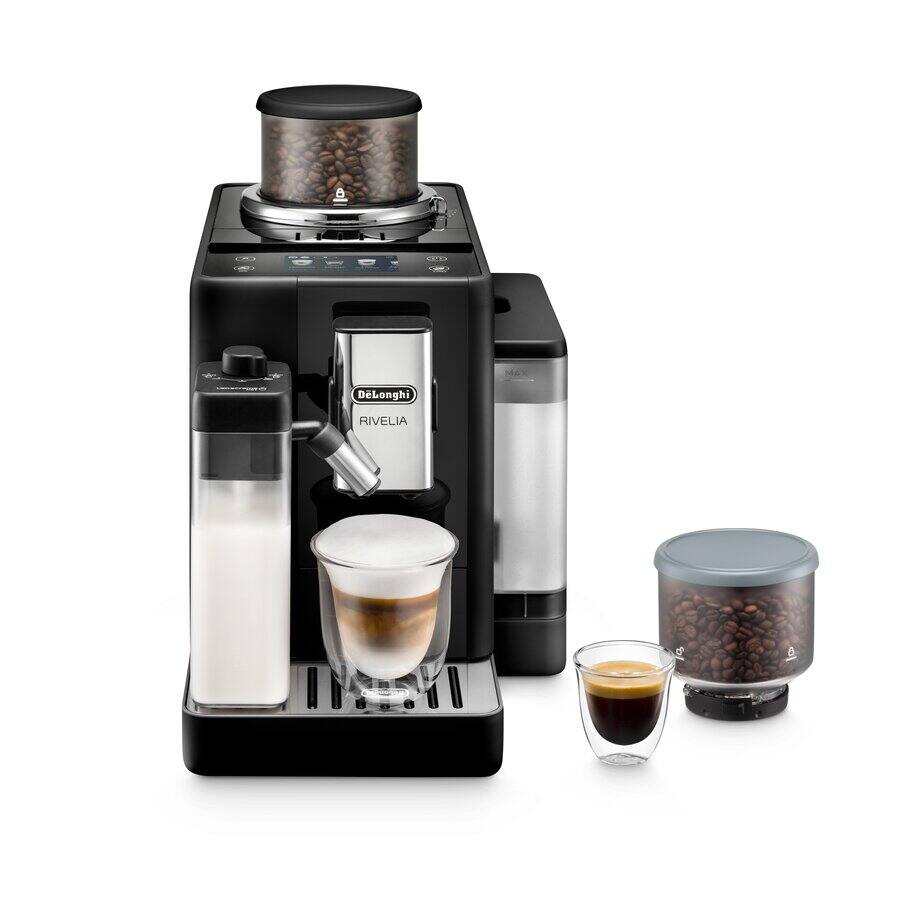
The verdict: the only pick in this roundup that solves the bean-hopper staleness problem this category otherwise has by design. Two removable 250-gram hoppers, a Bean Adapt profile saved per bean, and no re-tuning when you swap.
Best for: the household running two beans in rotation, a decaf for the afternoon, a light-roast weekend origin, a partner’s preferred blend.
Bean hoppers are where taste dies in a super-auto. Loading a big hopper once is convenient; the cost is that beans oxidize fast once they’re in there, and by day ten your carefully sourced beans taste like the hopper’s average. The De’Longhi Rivelia solves that with hardware. Two sealed, interchangeable 250-gram hoppers, and Bean Adapt Technology remembering a separate grind, dose, and temperature profile per bean. Swap the hopper, the machine adjusts, no re-dial.
Coffeeness’s verdict is that the Rivelia “gets more right than any other machine around the $1500 price point.” Across the review consensus, the espresso lands closer to a well-dialed prosumer semi-automatic than any other bean-to-cup in this tier. The built-in grinder gets the dose right, and the shot has enough body to hold up in an 8-ounce cappuccino.
Pros:
- Bean Switch dual-hopper solves the staling problem. Sealed, removable, and small enough that beans stay fresh in a normal use cycle.
- Bean Adapt keeps profiles per bean. Grind size, dose, and temperature saved so a swap is one motion.
- Espresso quality punches above the tier. The closest bean-to-cup we’ve read reviewers describe to a well-dialed semi-auto around this price.
- LatteCrema Hot carafe from the same family as the Evo. Same milk quality, wider drink options.
- Compact footprint for the tier. Fits under standard cabinets.
Cons:
- Best with medium to medium-dark roasts. Light-roast performance is the compromise, like most super-autos.
- Two 250-gram hoppers instead of one big one. Philosophically correct (you don’t want a big hopper), but ergonomically new. Owners who like a “loaded” machine complain about the top-up rhythm.
- Touchscreen animations get chatty. Fine at first, small nuisance once you know the menu.
If you drink one bean, the Rivelia is more machine than you need. Buy the Evo. If you drink two, the Rivelia is the machine that lets both taste right. That’s the whole pitch of the De’Longhi Rivelia automatic espresso machine, and it lands for a specific reader.
Jura E8 — Best for Milk Drinks
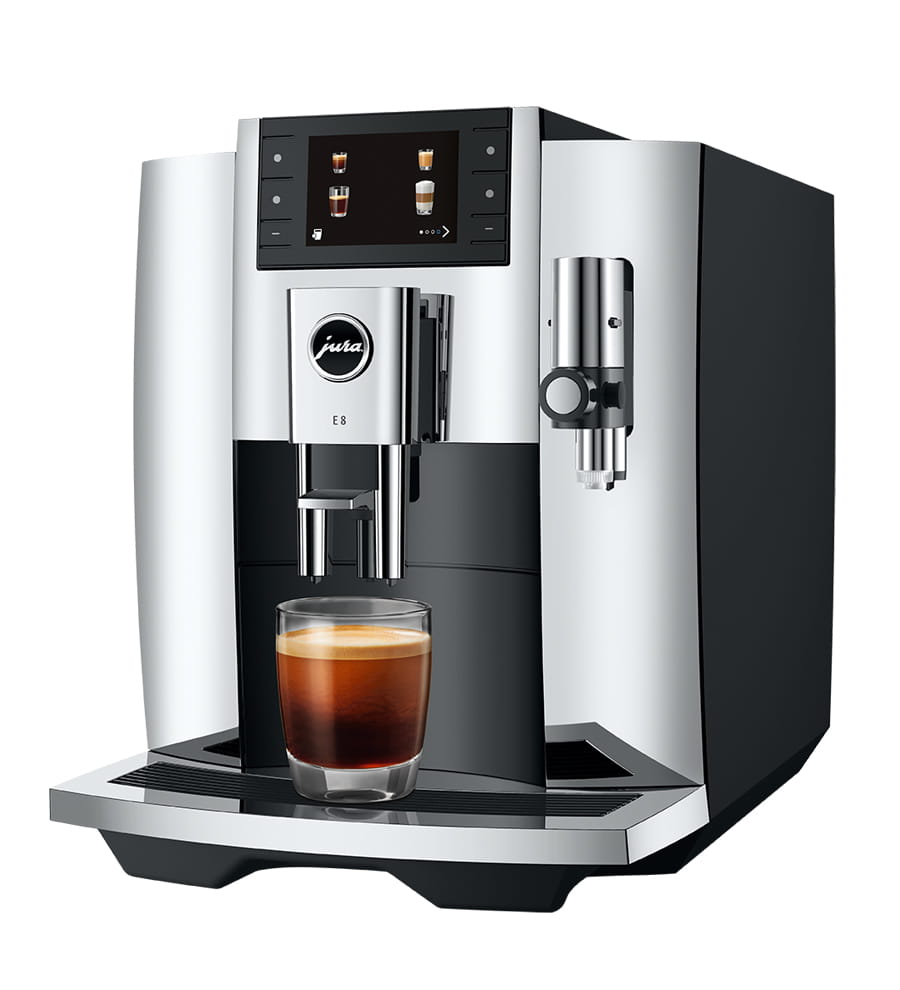
The verdict: the super-auto to buy if your primary drink is a cappuccino, flat white, or cortado and foam quality is what you’d pay for. HP3 Fine Foam is the closest auto-frothed microfoam in the roundup to what a specialty café would serve.
Best for: the milk-drink primary, someone who’s decided the shot quality plus the foam texture is worth the premium jump over the $800 tier.
The Jura E8 outperforms the budget picks on shot quality for reasons that aren’t marketing. The AromaG3 ceramic burr grinder runs cooler than steel at speed, which keeps aromatics in the puck. The IPBAS pre-brew system briefly wets the puck before extraction, which improves body. The eighth-generation 3D brewing unit passes water through the puck at multiple points for a more even extraction.
The Tested Hub ran the E8 through eight months and roughly 2,800 drinks. Their verdict, “the super-automatic to buy if you want café-style coffee with one button press,” is the closest thing to a long-term consensus in this category. HP3 microfoam is what reviewers say a specialty café would serve without embarrassment.
Pros:
- HP3 Fine Foam microfoam. Closer to café steam-wand foam than any other auto-frother in the roundup.
- AromaG3 ceramic grinder + IPBAS pre-brew. Shot quality genuinely outperforms budget super-autos.
- 17 one-touch specialties. Broad enough to cover an office or extended family.
- Self-cleaning milk system. Removes the most annoying daily maintenance chore in the category.
- Jura build quality. The knobs and buttons feel like a premium-tier machine because it is one.
Cons:
- No milk carafe included in the box. At the price, reviewers consistently call this an insulting omission. Buy the compatible glass or thermal carafe separately, or you’re pouring from a jug.
- Milk-line hygiene critique holds. The internal milk tube can’t be manually cleaned, only chemically flushed via the self-cleaning cycle. Fine if you run it religiously; a concern if you skip a week.
- Doesn’t fully deliver silky latte microfoam. The E8 excels at cappuccinos and flat whites; a proper steam-wand steam boiler still wins on the 8-ounce silky latte pour.
If you drink two milk drinks a day and one of them is a cappuccino, this is where the premium delta starts to make sense. Anyone weighing this against a semi-automatic for that use case can compare notes with our best for beginners breakdown. The honest answer isn’t always “buy the semi-auto.”
Terra Kaffe TK-02 — Best Smart / App-Driven
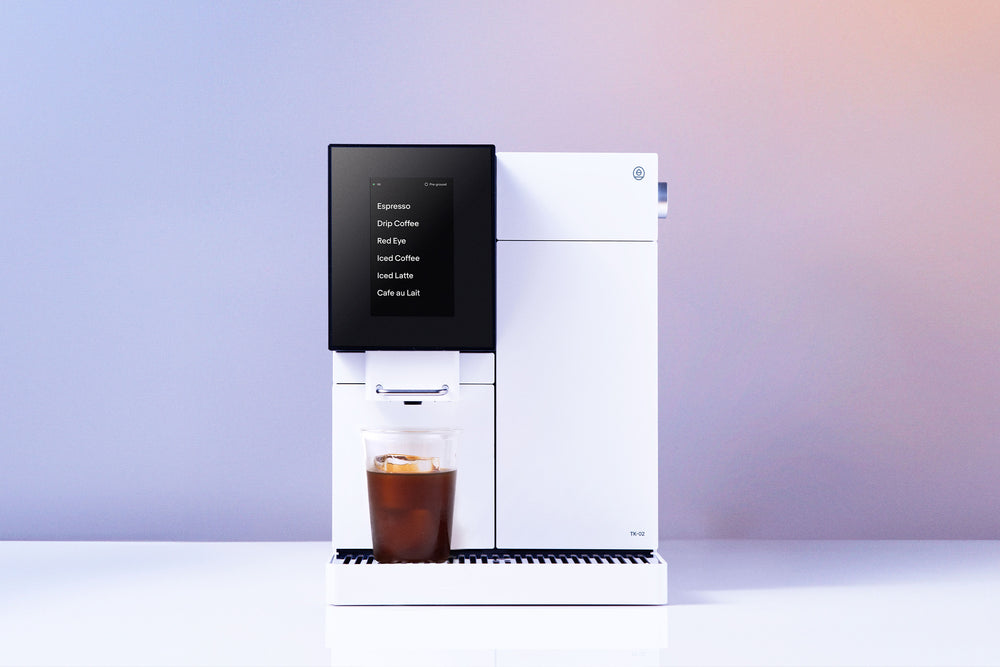
The verdict: the smart-home household’s super-auto, and the only pick that meaningfully combines espresso and drip coffee in one machine. App-first UX, roughly 100,000 drink combinations, cloud-saved user profiles.
Best for: the household with a smart-home setup, mixed espresso-and-drip drinkers under one roof, and buyers who want premium build without the Jura tax.
Terra Kaffe is the youngest brand in this roundup, and it shows in the UX. The Terra Kaffe TK-02 is app-first. Wi-Fi is standard, an iOS/Android app saves per-user drink profiles, and Terra Kaffe claims about 100,000 combinations across grind, temperature, and volume. Espresso pulls competently. The drip side is genuinely useful in a mixed household where one person wants an 8-ounce coffee and one wants a cortado. Combined machines usually compromise on both; this one compromises less.
Tom’s Guide calls it “the most accessible and connected way to get café-quality brews at home each day.” That’s about right. The machine automates the tedious parts, and the personalization lives in the app for the people who want it, not on the machine for the people who don’t. The price undercuts the Jura E8 by a few hundred dollars for comparable premium build.
Pros:
- Smoothest app in the category. Cloud-synced profiles, remote-brew, per-drink customization on a phone.
- Espresso and drip in one machine. Genuinely useful for mixed households. Few super-autos even try this.
- Undercuts the Jura E8 on price. Similar premium build for a few hundred less if you’re shopping at this tier.
- Extensive personalization. ~100,000 combinations across grind, temperature, and volume.
Cons:
- App-first UX is a con for some buyers. You can operate the machine directly, but the good stuff lives in the app. If you don’t want your coffee machine on Wi-Fi, this isn’t it.
- Newer brand than Jura or De’Longhi. Long-term reliability record is still being written, and the app ecosystem depends on the company staying in business and supporting its cloud. InsideHook’s review flags the same thing.
- Footprint runs larger than most sweet-spot picks. Verify countertop-to-cabinet clearance per install; the 18-inch rule is borderline here.
If your household runs on smart-home rails already and one of you drinks espresso and one drinks drip, the Terra Kaffe TK-02 solves a two-machine problem with one.
Jura Z10 — Best Flagship and Best for Cold Coffee
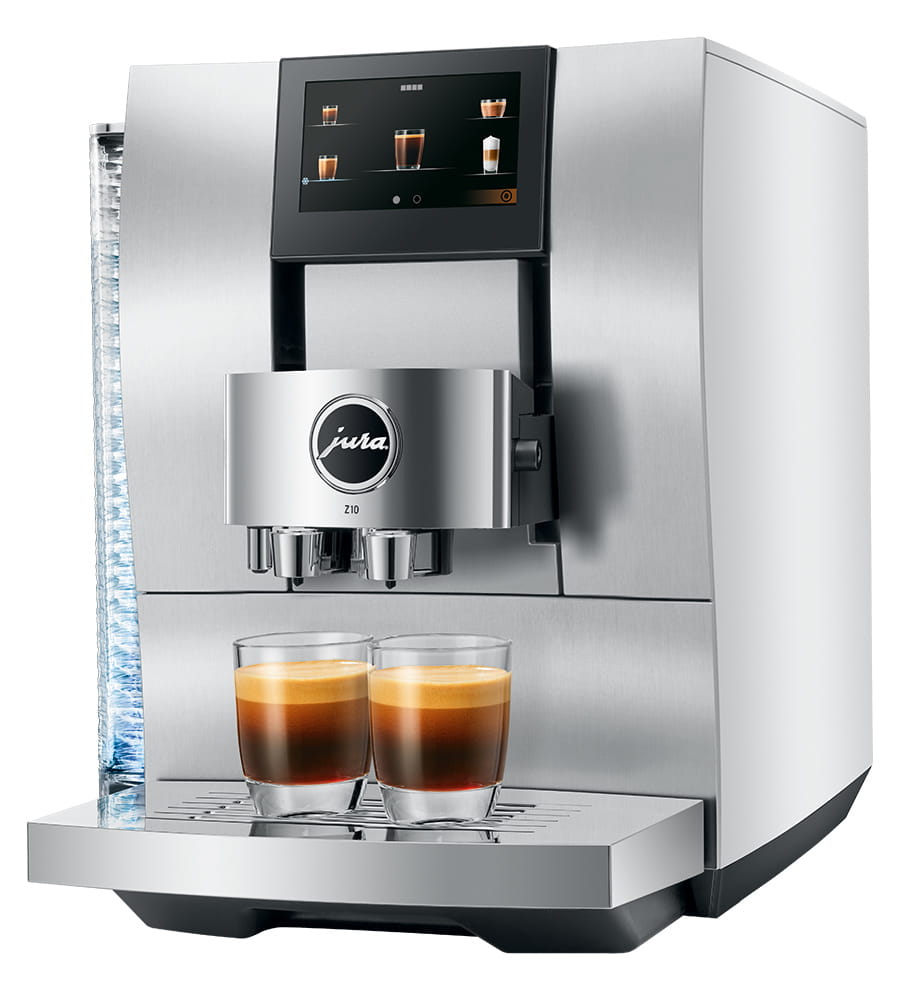
The verdict: Jura’s flagship, and the only fully automatic espresso machine that meaningfully brews cold coffee. The Cold Extraction Process pulses cold water at pressure through a coarse-ground puck. Actual cold-extracted coffee, not chilled hot brew.
Best for: the buyer who actually drinks iced americanos or cold brew and refuses a separate device. Also anyone who wants the polish and drink range of Jura’s flagship and won’t be talked down to the E8.
The Jura Z10 does something no other super-auto in this category can do. Home Coffee Expert calls it the only fully automatic machine that “does something no other fully automatic coffee machine can do: brew cold coffee.” Everyone else who advertises iced coffee is chilling hot brew and pouring it over ice. The Z10 grinds coarser, pulses cold water at pressure through the puck, and gives you an actual cold-extracted cup that tastes like it belongs beside cold brew, not warm coffee poured over rocks.
The Product Recognizing Grinder is the second differentiator. It auto-adjusts grind size per drink, finer for ristretto and coarser for a long or cold specialty. Combined with HP3 Fine Foam (same as the E8), a 4.3-inch touch display, and 40 total hot and cold specialties, the Z10 earns the “flagship” label rather than defaulting to it.
Pros:
- Cold Extraction Process is genuinely differentiated. Real cold-extracted coffee from a fully automatic. The only super-auto that does it.
- Product Recognizing Grinder auto-adjusts. Per-drink grind size, no user re-tuning. Category-first.
- 40 hot and cold specialties. The broadest drink menu in this roundup.
- HP3 Fine Foam. Same microfoam quality as the E8.
- Jura’s flagship build and UX. The touch display, the material choices, the switchgear all reflect the price.
Cons:
- Price is the primary barrier. The delta over the E8 is real but only worth it if you actually use the cold and hot specialties. If not, buy the E8 and pocket the difference.
- Same milk-line hygiene critique as the E8. Jura architectural. The internal milk tube is chemically flushed only, never manually cleaned.
- At this price a semi-auto is a legitimate alternative. For a purist who’ll steam their own milk, a good prosumer machine plus a manual burr grinder is a competing use of the money.
The buyer for it already knows they want it. They drink iced coffee half the year, or they’ve had a Jura before, or they don’t want to replace the machine again. If that’s you, buy it. If not, buy the E8.
How to Choose an Automatic Espresso Machine
Two decisions actually change what your coffee tastes like. Everything else is trim.
The Milk System Is the First Decision
Every super-auto froths milk somehow, and the “somehow” ranges from a manual steam wand you operate to a fully automatic carafe that spits foam into your cup. Understand which architecture you’re eyeing before you buy. This is where the tier differences show up most clearly in daily use.
- Manual steam wand super-autos exist (mostly at the lower entry price) and let you steam like a semi-automatic operator. Skip unless you actually want to practice.
- Auto-frother carafes (LatteCrema Hot on De’Longhi, LatteGo on Philips) plug into the machine, hold your milk, and dispense frothed milk into the cup on a one-touch drink. Different systems produce different foam textures. LatteCrema Hot is thicker, LatteGo is thick and light, HP3 is closer to microfoam.
- One-touch integrated systems (Jura’s HP3 Fine Foam) live inside the machine and produce microfoam through a fine-foam head, not a wand. This is where the closest-to-café foam lives.
Steam wand carries “real barista” cachet in coffee marketing. In the home, a user who won’t practice pouring gets a better cappuccino from a competent auto-frother than from a steam wand they haven’t learned. Aspiration and outcome aren’t the same buying criterion. Buy for what you’ll actually do at 6:50 on a Tuesday, not what you’d like to do on a Saturday afternoon that never quite arrives.
Grinder Quality Is the Second Decision
The grinder is half the shot. James Hoffmann’s line “your grinder will make more difference to your coffee than any other piece of equipment you own” applies inside a super-auto too. The differences that matter:
- Burr type. Steel conical burrs (most De’Longhis) grind fast and hot. Ceramic flat burrs (Philips 3200 and 4300) and ceramic conicals (Jura) run cooler and preserve aromatics.
- Number of settings. Twelve to thirteen positions is plenty for medium-roast beans; light-roast enthusiasts feel the ceiling.
- Per-bean or per-drink adjustment. Jura’s Product Recognizing Grinder and De’Longhi’s Bean Adapt (on the Rivelia) address the “one grind fits all drinks” problem in different ways.
Anyone who calls all built-in grinders equivalent is wrong. They aren’t, and it shows in the cup by month three. More on the grinder side of this decision in our espresso machine with grinder roundup.
The Bean Hopper Is Where Taste Dies
A super-auto’s whole convenience thesis rests on keeping beans loaded. That’s also where taste goes if you load once and forget. Beans oxidize fast in a hopper. Light exposure, air, and the machine’s own heat all speed the process. Optimal bean age is roughly 7 to 21 days post-roast; by day 30 in a bright hopper you’re drinking something less than what the roaster shipped you.
The design answer is the Rivelia’s dual removable 250-gram hoppers, sealed and swap-friendly. The workflow answer for everyone else is to top up small amounts and never load beans you won’t drink in a week.
Cabinet Clearance Matters
Standard countertop-to-upper-cabinet clearance is 18 inches. Every full-size super-auto ships close to that, and you fill the bean hopper from the top. Measure before you buy. The Magnifica Evo clears at 14.17 inches. The Jura Z10 and Terra Kaffe TK-02 sit around 14 to 15 inches and are borderline in some kitchens. A machine that doesn’t fit is a machine you regret before the shipping label prints.
Auto-Clean Is Non-Negotiable
Descaling and milk-line hygiene are the two maintenance jobs that decide whether your machine lasts five years or two. Every pick above has an auto-clean cycle. The difference is whether the machine nags you into using it, and whether you listen when it does.
When to Skip This Category and Buy a Semi-Automatic Instead
If you want to learn espresso (dial in a grind, taste the difference between two beans of the same roast level, feel a shot pull), buy a semi automatic espresso machine instead. Everything in this roundup is a bean-to-cup sealed system. You put beans and water in the top and drinks come out the front. That’s the pitch, and it’s the trade-off. You don’t dial anything in. You don’t taste the difference between last week’s Ethiopian and this week’s Colombian at the same espresso setting.
That’s fine if what you want is the cup and not the ritual. It’s a wrong buy if what you want is to become the person who makes the ritual. James Hoffmann has called espresso the most intolerant method of food preparation of any food or drink in the world, which means the reward for actually learning it is real. A well-dialed semi-automatic espresso machine plus a good burr grinder will out-pour any super-auto in this roundup for the buyer who’ll put the reps in.
The buyers we watch make the wrong super-auto purchase are almost always the enthusiast ones. The person who spent an afternoon watching pour-over videos, then bought a bean-to-cup because the reviews were good. Six months later they’re bored, and the machine is a counter piece.
If you’re the reader who wants to be involved in the shot, spend the same money on a semi-automatic and a real burr grinder. Our how to make espresso walkthrough is where to start. If you’re the reader who wants the cup on the counter in ninety seconds, the machines above deliver.
Frequently Asked Questions About Automatic Espresso Machines
What is a fully automatic espresso machine?
A fully automatic espresso machine is a bean-to-cup machine that grinds, doses, tamps, brews, and often froths milk from a single-button command. You load beans and water, and the machine handles the workflow. “Fully automatic” and “super-automatic” are the same category. Two names for the same machine.
Are fully automatic espresso machines worth it?
Yes, for the buyer who wants café-style drinks at home without a ritual. A fully automatic espresso machine you use every morning makes better coffee than a manual espresso machine you use twice a week. The daily-use bar decides what your coffee at home actually tastes like. The category is a wrong buy for the reader who wants to learn espresso; a semi-automatic delivers more for the same money if you want to be involved in the shot.
How much does an automatic espresso machine cost?
Entry-tier automatic espresso machines start around $500 to $700 (Magnifica Start). The sweet-spot tier, where the biggest jump in daily reliability happens, runs $800 to $1,500 (Magnifica Evo, Philips 3200, Rivelia). Premium and flagship machines run $2,000 to $4,000 (Jura E8, Terra Kaffe TK-02, Jura Z10). Live retailer prices move; the “Check Current Price” button under each pick has the current number.
What’s the best automatic espresso machine?
The De’Longhi Magnifica Evo is the best automatic espresso machine for most home buyers. It’s the safest sweet-spot pick around the $800 mark, with a competent auto-frother, a reliable auto-clean cycle, and a track record long enough to trust. If milk quality is your primary buying criterion, the Jura E8 wins; if you run two beans, the De’Longhi Rivelia; if you drink cold coffee, the Jura Z10.
What is a semi-automatic espresso machine, and how is it different?
A semi-automatic espresso machine gives you manual control over shot timing, grind, dose, and (usually) milk steaming through a wand. The machine handles pressure and temperature, you handle everything else. Semi-autos reward learning; super-autos remove the learning. Which one is right depends on whether you want the ritual or the cup.
Do fully automatic espresso machines make real espresso?
Yes, fully automatic espresso machines make real espresso. The machine grinds beans, doses the puck, tamps, and brews under real pressure (9-plus bar on a properly built one). The resulting shot is real espresso by the extraction physics. The trade-off is that you don’t dial it in the way a semi-automatic operator would. For most home drinkers, the shot out of a Jura E8 or a Magnifica Evo is well past “real espresso” and into “genuinely good espresso.”
So Which Automatic Espresso Machine Should You Buy?
Buy the De’Longhi Magnifica Evo if you want the safest sweet-spot pick and you didn’t come in with a specific requirement. It’s the machine we’d hand to a friend who asked and didn’t want a long conversation about it.
Buy the Philips 3200 LatteGo if milk-carafe cleanup is what would sink you on a super-auto. Buy the De’Longhi Rivelia if you’re running two beans in rotation. Buy the Jura E8 if a cappuccino or flat white is what you drink every day, and buy the Jura Z10 if you actually drink cold coffee in the summer months. Buy the Terra Kaffe TK-02 if your household lives on smart-home rails and one of you drinks espresso and one drinks drip.
Buy the De’Longhi Magnifica Start if the Evo is out of budget, and skip the category entirely if you want to learn to pull espresso. Buy a semi-automatic and a good burr grinder instead. And if the milk drink is the whole reason you’re shopping, our cappuccino machines roundup is the neighboring aisle.