
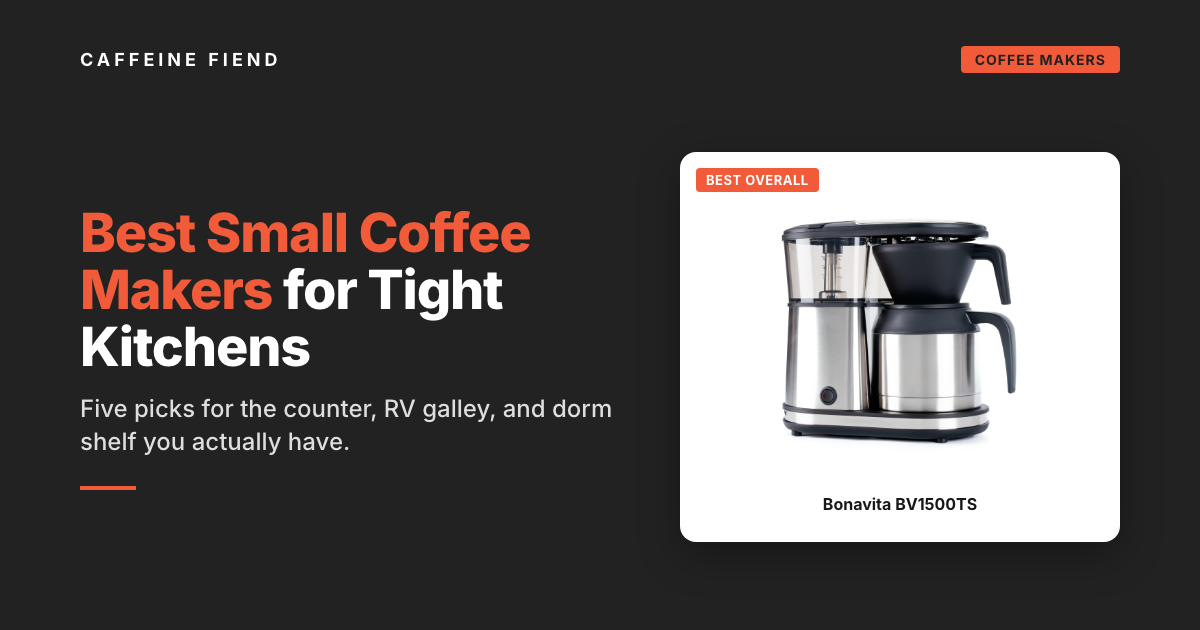
The best small coffee maker we picked is the Bonavita BV1500TS, a 6.2-inch-wide, 5-cup drip machine that’s SCA Certified for the 195–205°F brew band and pours into a double-walled thermal carafe. No hotplate scorching your coffee flat over the following hour. That’s the whole “small doesn’t have to mean compromise” argument in a single machine.
If a compact drip that clears the specialty-coffee bar isn’t what you’re after, this roundup has four other picks matched to specific scenarios: sub-6-inch footprints for an RV galley, sub-$40 budget kitchens, one-cup-at-a-time from ground coffee, and the pod-machine slot for dorms and offices where a hotplate drip machine won’t fly.
“Small” is really two different questions, and the same word hides both. For some readers the constraint is footprint (the kitchen counter, the RV galley, the dorm shelf). For others it’s capacity: one person who drinks two cups a day and doesn’t want half a pot going stale.
The Small Coffee Makers We’d Buy
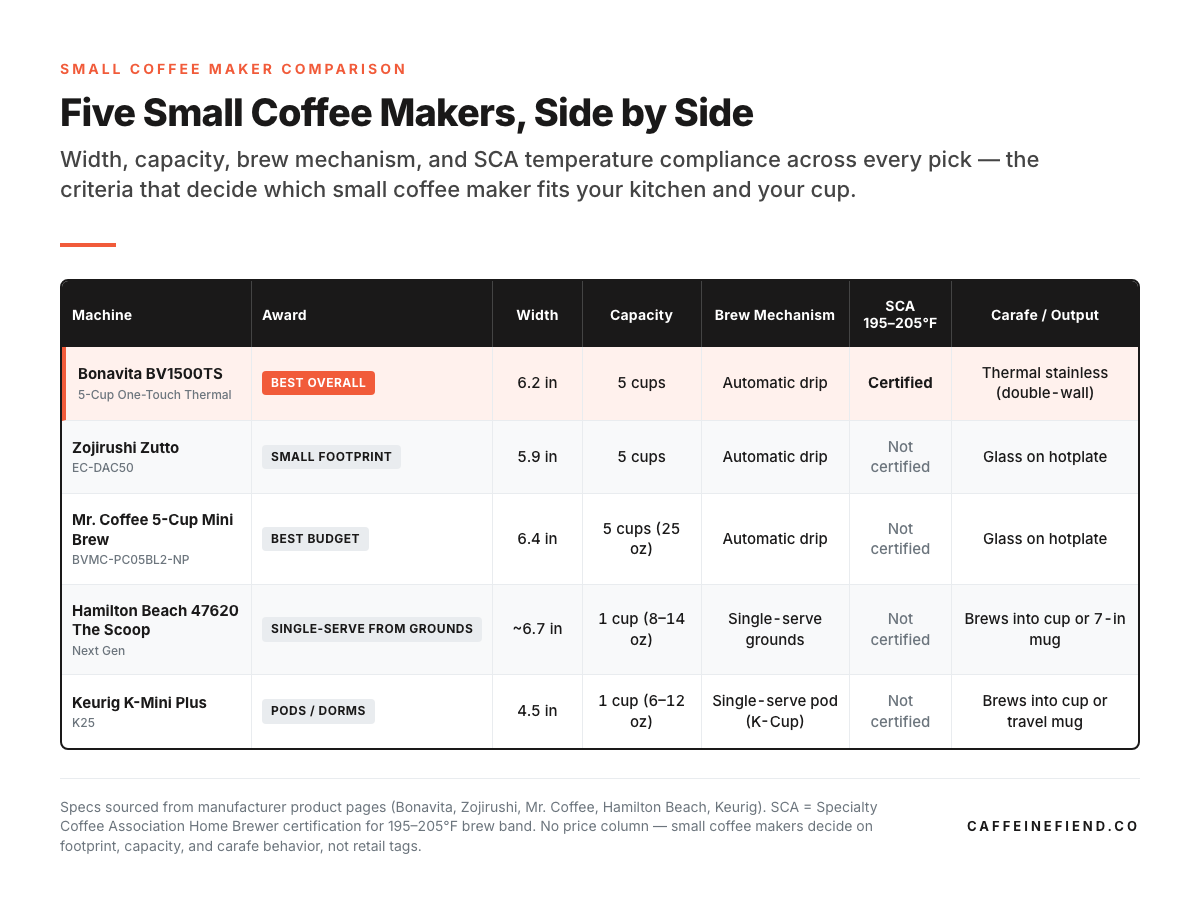
| # | Machine | Best For | Width | Capacity | Carafe |
|---|---|---|---|---|---|
| 1 | Bonavita BV1500TS | Best Overall: coffee-lovers who want SCA-band brew and thermal carafe on the smallest footprint that clears the bar | 6.2 in | 5 cups | Thermal stainless |
| 2 | Zojirushi Zutto EC-DAC50 | Best Small Footprint / Two-Person: sub-6-in-wide counter, RV galley, low-power kitchen | 5.9 in | 5 cups | Glass + hotplate |
| 3 | Mr. Coffee 5-Cup Programmable Mini Brew | Best Budget: sub-$40 with a real timer and a reusable filter | 6.4 in | 5 cups (25 oz) | Glass + hotplate |
| 4 | Hamilton Beach 47620 The Scoop | Best Single-Serve From Grounds: desk drinker who wants one cup from ground coffee, no pods | ~6.7 in | 1 cup (8–14 oz) | Brews into cup/mug |
| 5 | Keurig K-Mini Plus | Best for Pods / Dorms: Keurig’s slimmest brewer, housing-rule friendly | 4.5 in | 1 cup (6–12 oz) | Brews into cup/mug |
How We Picked
We approached this roundup the way we approach every buyer’s guide at Caffeine Fiend. Match a specific scenario to a specific machine, and refuse to hand anyone a Keurig by default just because the kitchen is small.
- Footprint. Width under about 7 inches, since standard countertop-to-upper-cabinet clearance is 18 inches (per Angi’s kitchen design reference) and the machine needs to actually fit, not just claim “compact” on the box.
- Brew temperature. The SCA Home Brewer certification pegs the flavor band at 195–205°F. Machines that hold it beat machines that don’t, and we call out where they don’t.
- Carafe behavior. Thermal versus glass on a hotplate is the biggest heat-retention decision in the category. Consumer Reports has tested this: glass on a hotplate loses temperature slower, but the plate keeps re-cooking the brew, so thermal holds the flavor closer to brew-end.
- Filter economics. Reusable versus paper. Permanent gold-tone or nylon filters trap fewer oils for a fuller-bodied cup; paper filters yield a cleaner one. Reusable also means no ongoing filter cost.
- Power draw and dorm-policy compatibility. RV owners on 1000W inverters can run a 650W drip as a resistive load but not a 1300W pod machine’s heat-up spike (community consensus on the Jayco Owners Forum). Dorm restricted-items policies typically clear UL-listed pod machines with auto-shutoff and get skittish about hotplate drip (Brown University’s policy is representative).
- Honest cons. Every pick, including Best Overall, carries a specific, named trade-off. A roundup where everything is “amazing” reads as paid placement.
We drew on hands-on measurements from third-party labs (TechGearLab, Consumer Reports), manufacturer specs, and community-consensus signals from RV and dorm-life communities.
Bonavita BV1500TS — Best Overall
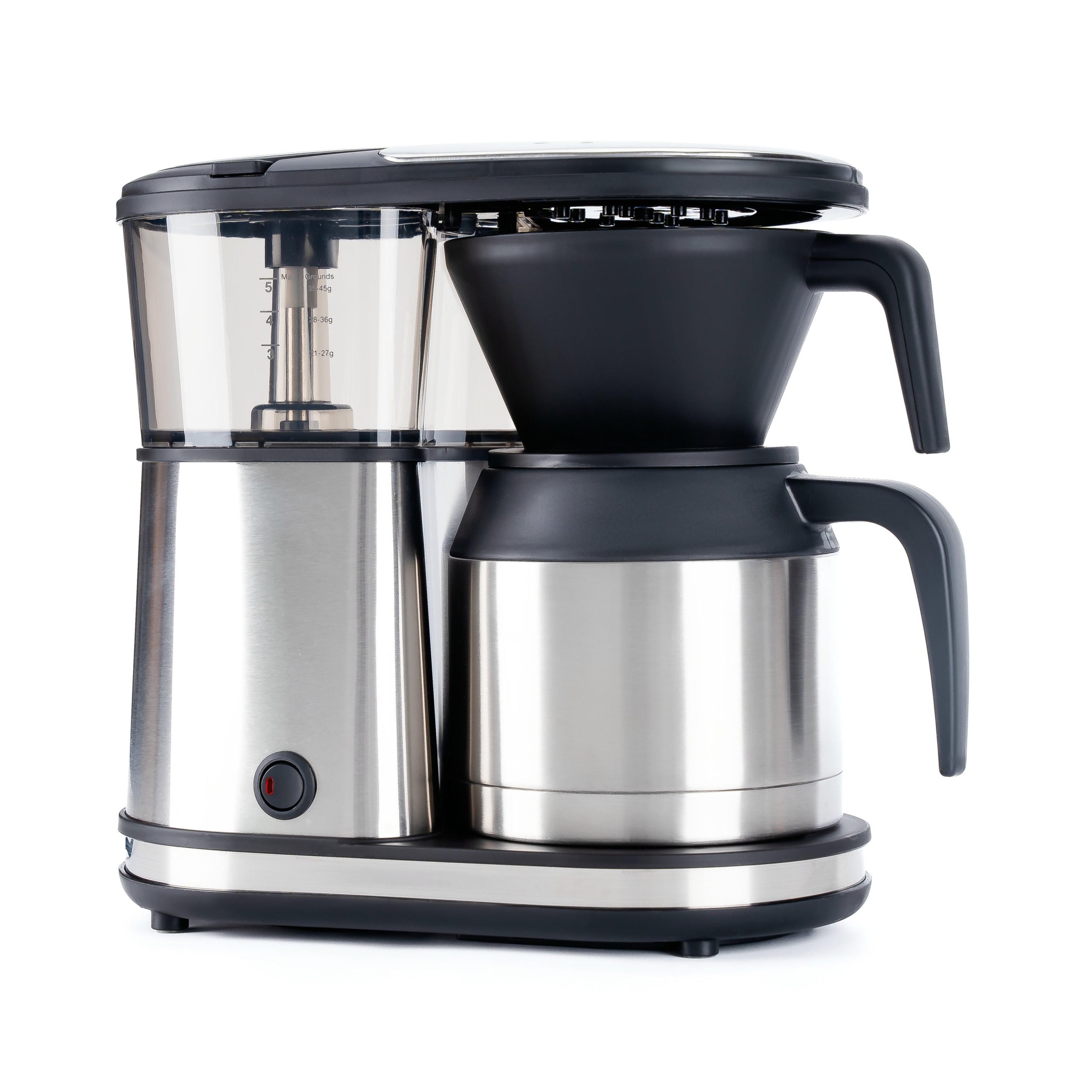
Verdict: The compact SCA-certified drip machine, full stop. The Bonavita BV1500TS is the smallest genuinely SCA Certified Home Brewer currently in production: 6.2 inches wide, 5 cups, thermal carafe, and a 1100-watt heater that holds the 195–205°F band across the brew. This is the machine that breaks the “small equals flavor compromise” assumption.
What it gets right. It’s hard to go wrong with Bonavita on temperature stability, and the BV1500TS is why. It’s a one-button machine. Fill the reservoir, press the switch, walk away. The double-wall stainless thermal carafe means no hotplate scorching the coffee flat over the following hour, and the optional pre-infusion mode gives the grounds a proper bloom. TechGearLab’s tested-and-rated review found it “consistently hits optimal brewing temperatures and includes an automatic pre-infusion mode that allows it to brew better-tasting coffee compared to less expensive options.” That’s a specialty-caliber cup on a machine that fits under a standard upper cabinet.
The trade-off. If we had to point out any downsides, it would be that the brew basket sits directly on top of the carafe. The loose filter holder is awkward to lift off one-handed after brew, and the carafe needs its screw-on lid to keep coffee hot for the next hour. Manufacturer instructions also ban vinegar for descaling. It’s the priciest pick in the roundup by a wide margin, and paper #4 filters are the default (permanent gold-tone is an aftermarket add).
Pros:
- SCA Certified brew temperature: Holds 195–205°F across the brew, verified by third-party lab measurement.
- Double-wall thermal carafe: No hotplate, no scorched flavor.
- Optional pre-infusion: Full bloom before the brew, unusual at this footprint.
- One-touch operation: No button-hunting on a bleary Tuesday morning.
Cons:
- Brew basket sits on the carafe: Awkward to remove one-handed after brew.
- Screw-on carafe lid required: For heat retention, extra step every pot.
- No vinegar descaling: Bonavita’s solution or citric acid only.
Best for: Coffee-lovers on a small counter who refuse to trade brew temperature for footprint. The smallest small coffee maker with thermal carafe that also clears the specialty-coffee temperature bar.
Zojirushi Zutto EC-DAC50 — Best Small Footprint / Two-Person
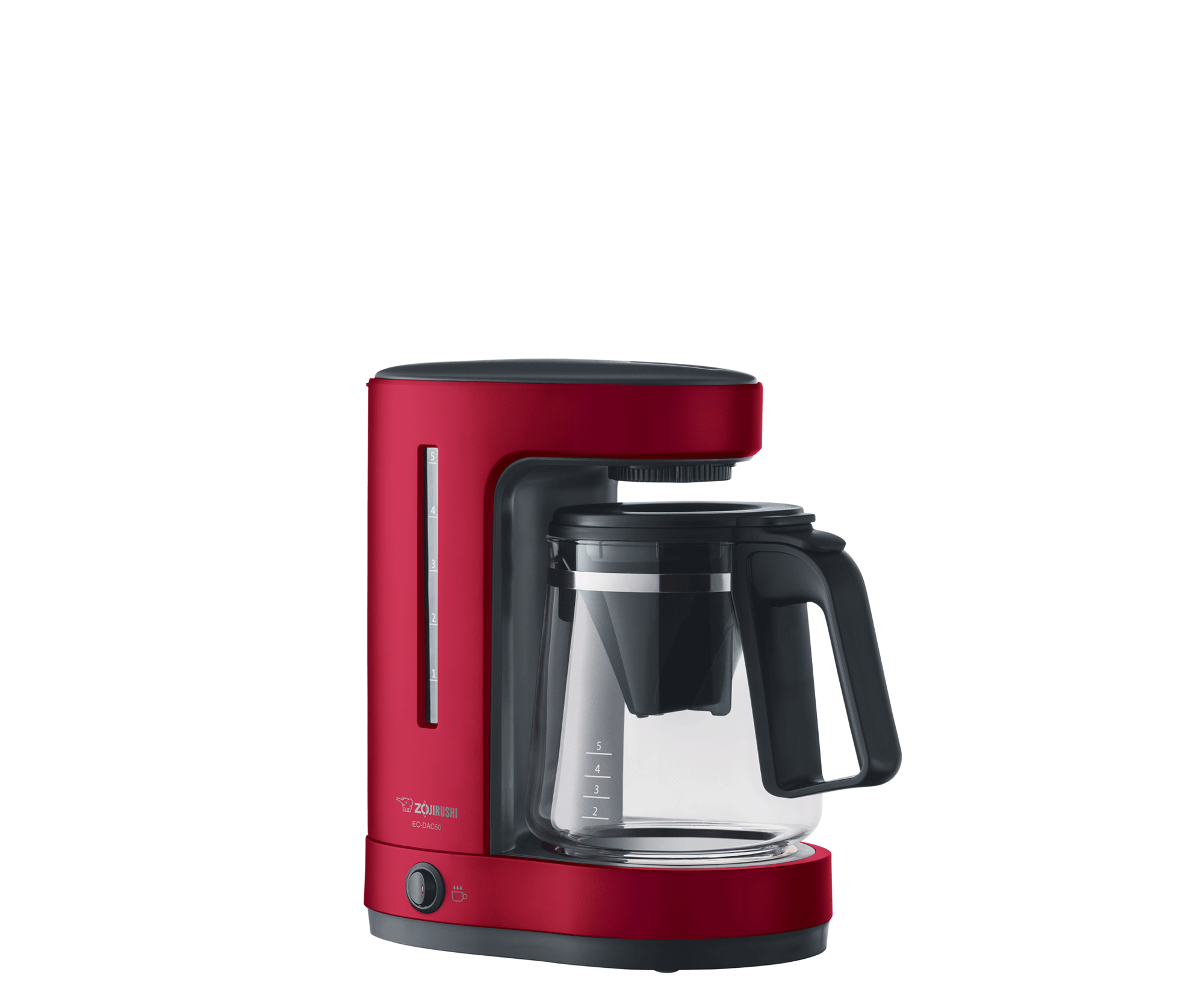
Verdict: If your counter constraint is width (a sub-6-inch slot under low cabinets, an RV galley on a 1000-watt inverter, or a two-person kitchen where nothing else can budge), the Zojirushi Zutto EC-DAC50 is the pick. At 5-7/8 inches wide, it’s the tightest compact drip in the roundup, and the 650-watt power draw is what earns it the RV slot.
What it gets right. It’s hard to go wrong with anything Zojirushi makes. The Zutto is no different. The build reads as a real appliance, and food-contact surfaces are PFAS-free and BPA-free. The removable water tank is a small quality-of-life win in a tight kitchen. The 650-watt draw is why RV owners consistently name this as the compact drip that pairs with a 1000-watt pure-sine inverter. Community consensus on the Jayco Owners Forum has 5-cup drip machines at this wattage running as a clean resistive load, while K-Cup machines spike to 1200–1300 watts at heat-up and can trip peak protection. (Our coffee makers for RVs roundup has the fuller RV-inverter picture.)
The trade-off. The Zutto lands on a glass carafe with a hotplate. Coffee starts degrading in flavor after about 30 minutes on the plate. No programmable Brew Later timer either, so you’re switching it on manually every morning.
Pros:
- 5-7/8-inch width: The narrowest true 5-cup drip in the roundup.
- 650-watt draw: RV-friendly on a 1000W pure-sine inverter as a resistive load.
- Zojirushi build quality: Feels like a real appliance at a budget-plus price.
- PFAS-free food-contact surfaces: Materials transparency most compact drip machines don’t offer.
Cons:
- Glass carafe on a hotplate: Coffee starts degrading after 30 minutes on the plate.
- No programmable timer: Manual switch-on every morning.
- Small water tank: More refills for anyone brewing back-to-back pots.
Best for: Sub-6-inch counters, RV galleys, and two-person kitchens where width and power draw are the real constraints.
Mr. Coffee 5-Cup Programmable Mini Brew — Best Budget
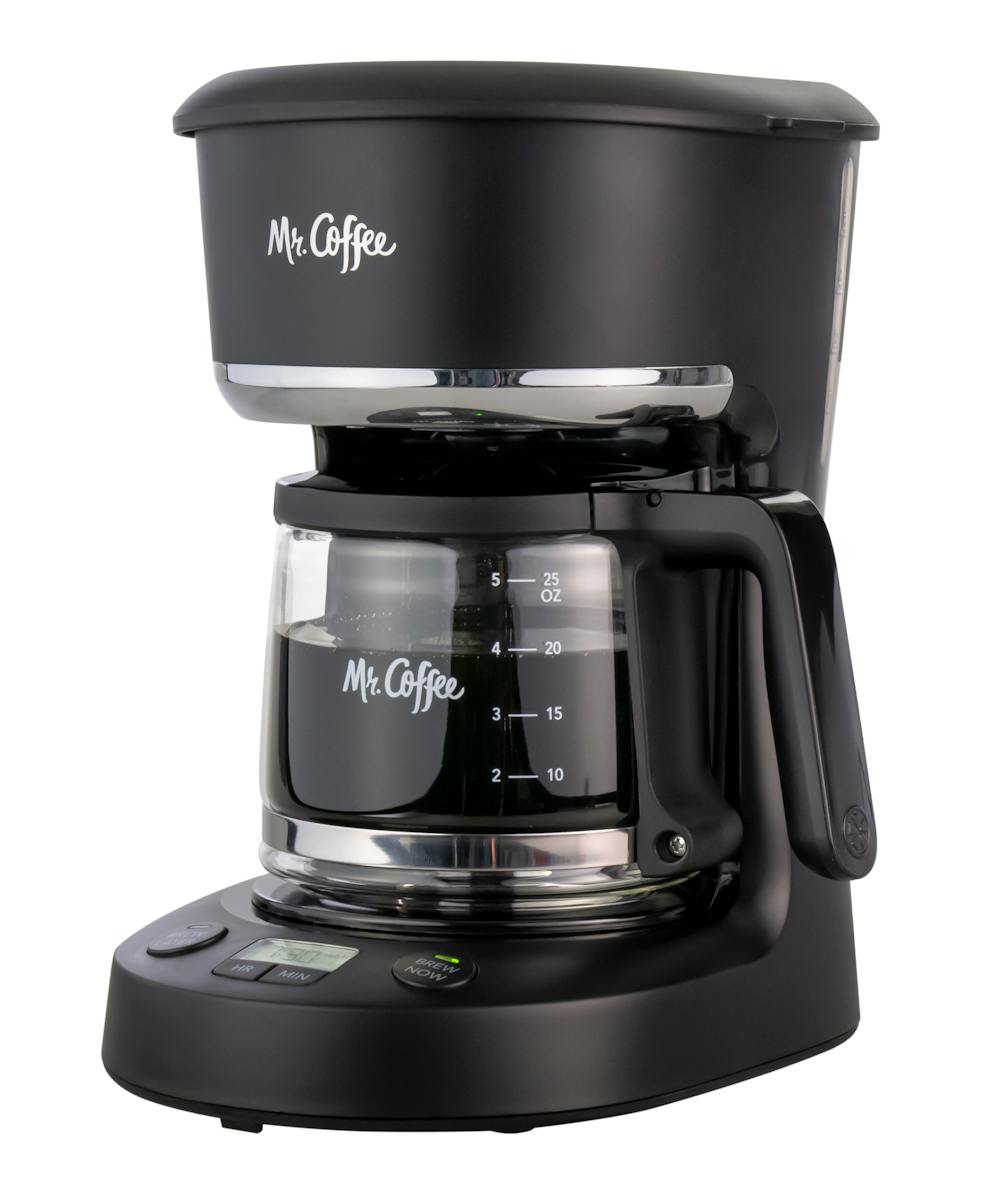
Verdict: For the budget-first shopper who wants the features that make a coffee maker feel like a real coffee maker, the Mr. Coffee 5-Cup Programmable Mini Brew is the pick. A programmable Brew Later timer, a reusable nylon filter, Grab-a-Cup Auto Pause, and a compact 5-cup footprint, all under $40. That’s an unusual feature stack at this tier, and it’s exactly what a small coffee maker with reusable filter should include out of the box.
What it gets right. Mr. Coffee is the category owner in the sub-$50 compact drip shelf, and this machine is why. The Brew Later timer alone is unusual on a sub-$40 machine. The reusable nylon filter is included, not sold separately (it also accepts #1 paper if you’d rather brew cleaner cups sometimes), and a charcoal water filtration disk is in the reservoir out of the box. Grab-a-Cup Auto Pause lets you pour mid-brew without a coffee stream still hitting the plate. TechGearLab’s tested review confirms the budget-tier positioning is honest.
The trade-off. The brew temperature does not consistently hold the SCA 195–205°F band. That’s the specific trade-off for a sub-$40 heater. TechGearLab measured brew temperature falling short of the specialty band across contact time, so if you’re chasing the cleanest extraction, this isn’t the pick. The plastic carafe handle feels exactly its sticker price in the hand, and leaving the pot on the plate longer than about half an hour pushes coffee past its flavor window.
Pros:
- Brew Later programmable timer: Wake up to a full pot on a compact drip under $40.
- Reusable nylon filter included: No ongoing paper-filter cost.
- Grab-a-Cup Auto Pause: Pour mid-brew without a hotplate stream.
- Water filtration disk included: Charcoal filter in the reservoir side, out of the box.
Cons:
- Brew temperature below the SCA band: Not a specialty-coffee-caliber cup.
- Plastic carafe handle: Feels the sub-$40 sticker in the hand.
- Hotplate over-cook: Coffee degrades if left on longer than about 30 minutes.
Best for: Sub-$40 shoppers who want programmable brewing and a reusable filter without pod-machine economics.
Hamilton Beach 47620 The Scoop — Best Single-Serve From Grounds
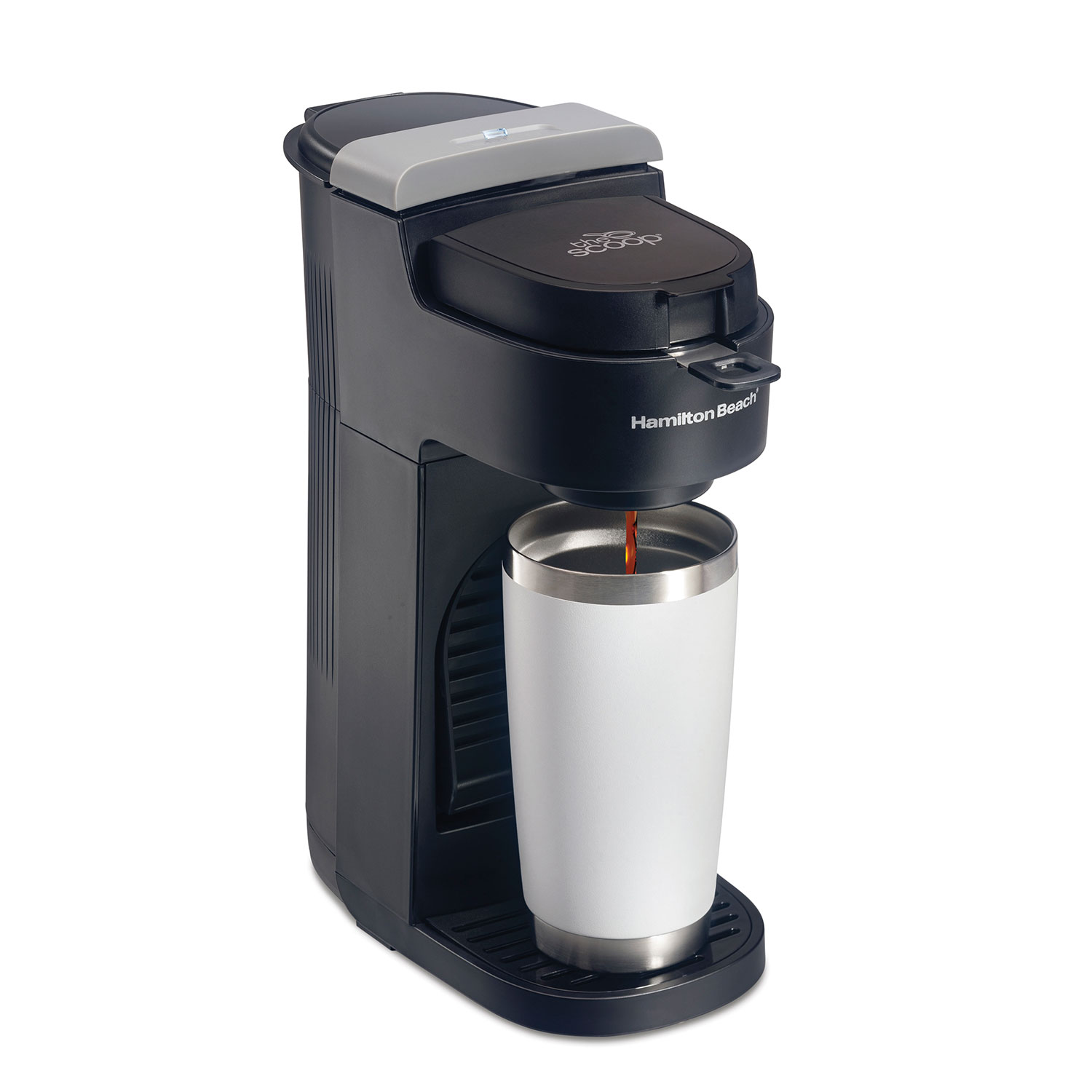
Verdict: If you want one cup at a time from ground coffee, the Hamilton Beach 47620 The Scoop is the machine. The mesh scoop doubles as both filter and measuring cup, the machine brews an 8-ounce cup in about 90 seconds, and there’s no paper or pod economics to deal with over the machine’s life.
What it gets right. The original 49981 won an IDSA industrial-design award, and the 47620 “Next Gen” inherits the same brewing mechanism. Scoop grounds into the mesh basket, snap it into the brew tower, hit the button, and the machine delivers 8 to 14 ounces straight into your mug in 90 seconds to 2.5 minutes. Money.com’s pod-cost analysis pins K-Cups at about $0.66 per cup versus roughly $0.28 per cup for ground drip, so this machine gets pod-machine convenience without the ongoing pod tax. The adjustable drip tray clears a 7-inch travel mug for the brew-and-run scenario.
The trade-off. Brew performance does not hold the SCA 195–205°F band across the full contact time. Consumer Reports lab-tested the predecessor 49981 and found brew temperature fell short of the specialty band held for 5 to 6 minutes. The 47620 uses the same brewing mechanism and inherits the same measured limitation. For a desk drinker who cares about not paying K-Cup prices, that’s usually the right trade-off; for a specialty-extraction obsessive, it isn’t.
Pros:
- Ground coffee, no pods: Pay ~$0.28/cup instead of $0.66/cup for K-Cups.
- Mesh scoop is the filter: No paper filters to buy or throw out.
- 90-second brew time: Faster than a Keurig for the 8-oz cup.
- Adjustable travel-mug clearance: Brews straight into a 7-inch mug.
Cons:
- Brew temperature below SCA band: Not a specialty extraction.
- Single strength selector: Regular or Bold, with no finer control.
- Some mineral buildup on the mesh: Needs periodic hand-rinsing or a light descale.
Best for: Home-office desk drinker or one-cup-at-a-time apartment who wants pod-machine convenience without pod-machine economics.
Keurig K-Mini Plus — Best for Pods / Dorms
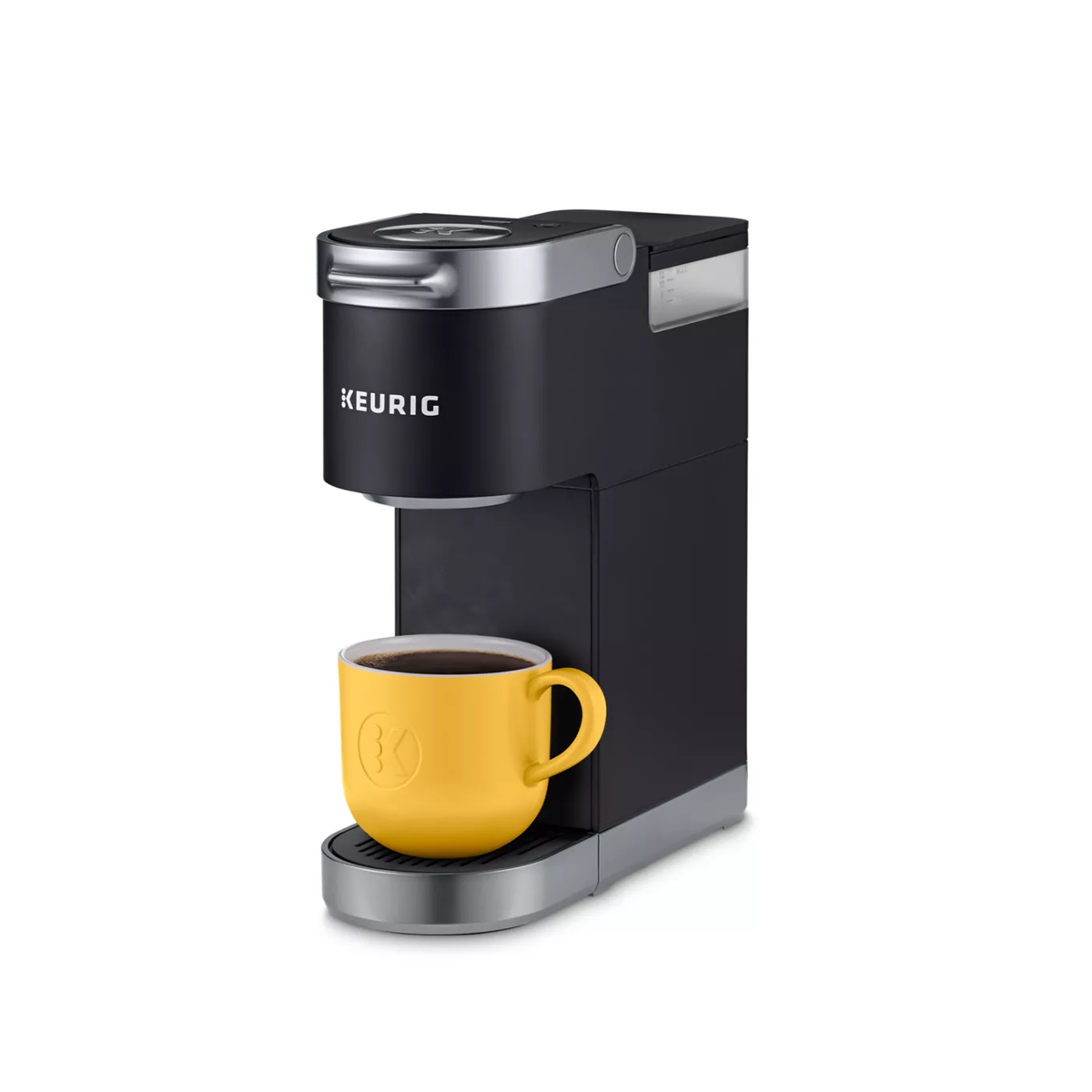
Verdict: When the constraint is either counter width under 5 inches or a housing-rule that bans traditional hotplate drip, the Keurig K-Mini Plus is the honest pick. It’s Keurig’s slimmest brewer at 4.5 inches wide, UL-listed with auto-shutoff, and the sort of appliance that clears residence-life inspection days without a headache. For pure coffee quality, other picks in this roundup beat it. For narrow counters and dorm housing rules, nothing else in the category fits.
What it gets right. At 4.5 inches wide, this machine fits under any standard upper cabinet in any orientation. Tom’s Guide’s hands-on review confirms the width is exactly what it says on the box. The single-cup reservoir means no standing water in the machine between brews, and the on-machine 9-pod storage slot removes the “where do I keep the pods” counter-clutter question. The UL listing plus auto-shutoff is what earns it the dorm slot. Brown University’s residential-life policy is representative of what most schools clear (UL-listed pod machines with auto-shutoff) and what they tend to ban (perpetually-hot commercial-style drip). This is the machine that keeps your RA out of your business.
The trade-off. Per-cup pod economics compound quickly. K-Cups average about $0.66 per cup versus about $0.28 per cup for ground drip (Money.com), so a two-cup-a-day habit costs $100 to $150 more per year on this than on a compact drip (Daily Living Life’s annualized pod-vs-drip comparison). No reservoir means refilling water before every brew, and there’s no brew-temperature adjustment. Scenario fit is what this machine is built for; specialty-caliber cup quality lives elsewhere in the roundup.
Pros:
- 4.5-inch width: Keurig’s slimmest brewer, fits any cabinet clearance.
- On-machine 9-pod storage: No counter-clutter question.
- Fresh water per brew: No standing reservoir water.
- UL-listed with auto-shutoff: Typically clears dorm housing-rule policies.
Cons:
- Per-cup pod economics: ~$100–$150/yr more than a compact drip on a 2-cup habit.
- Fill water every brew: No reservoir means no walk-away brewing.
- No temperature adjust: Locked at Keurig’s factory brew temp.
Best for: Dorm residents whose housing rules ban hotplate drip, and office-desk pod-convenience users who prize 4.5-inch width over per-cup coffee cost.
How to Choose a Small Coffee Maker
Is your constraint footprint or capacity? These are two different questions that share a word. If the kitchen counter, RV galley, or dorm shelf is the constraint, you’re shopping for width, under 6 inches if you can get it. If you’re one person who drinks one to two cups a day and doesn’t want half a pot going stale, you’re shopping for capacity, and a 4-cup or single-serve is the answer. The Zojirushi Zutto wins on width; the Hamilton Beach Scoop wins on single-cup capacity; the Bonavita threads both needles at 5 cups and 6.2 inches wide. Widening the field to full-size options, our best drip coffee makers guide covers the category proper.
Thermal carafe or glass on hotplate? The heat-retention decision is the biggest one after footprint. Consumer Reports has tested this specifically. Glass on a hotplate loses temperature slower than thermal by the numbers, but the plate keeps re-cooking the brew chemistry, so thermal holds coffee closer to the flavor it had at brew-end. If you drink your pot within 20 minutes anyway, it doesn’t matter. If you sip through the morning, get thermal. The Bonavita is the only pick in the roundup with a thermal carafe, because the sub-$50 compact drip market simply doesn’t offer thermal at that price point. The aspirational compact-SCA anchor above the Bonavita’s tier is Ratio Six at 12.5 inches wide and MSRP $359, the design object the Bonavita costs 40% of.
Reusable filter or paper? Reusable (gold-tone mesh or nylon) traps fewer oils and gives a fuller-bodied, slightly heavier cup with a small amount of sediment. Paper traps the oils and yields a cleaner, lighter cup. Bean Ground’s summary of the trade-off is honest: “if you like a cleaner cup of coffee with less oil, go with paper; if you want a bold brew with more natural oils, a reusable filter is worth it.” Reusable also means no ongoing filter purchases over the machine’s life. Mr. Coffee’s 5-Cup includes a reusable nylon filter out of the box; Hamilton Beach’s Scoop uses a permanent stainless mesh (no paper option); Bonavita uses #4 cone paper as the default with a permanent gold-tone filter as an aftermarket add.
One honest limit worth naming up front. No sub-$50 compact drip machine currently combines a reusable filter, a thermal carafe, and the SCA 195–205°F brew band in one machine. Bonavita has thermal plus SCA temperature (paper filter default). Mr. Coffee has reusable plus programmable brewing (glass carafe, no SCA temp). If you want all three at compact size, you’re at Bonavita money and you’ll add a permanent filter as an accessory.
Do you need a built-in grinder? Most compact drip machines don’t include one, and that’s a physics constraint. A built-in burr grinder adds 3 to 5 inches of width, which breaks the compact scoping. If you want a small coffee maker with grinder, the honest answer is that grind-and-brew machines start at full-size footprint (Breville’s Grind Control is 12+ inches wide, Cuisinart’s DGB is similar). For readers set on the grind-and-brew workflow, our coffee maker with grinder roundup is the deeper dive. For compact-first buyers, a separate small electric burr grinder plus one of the picks above beats the built-in-grinder machines on both quality and footprint.
Do you actually want drip, or would espresso serve you better? If you searched “small coffee maker” but a compact espresso rig would fit your habit better (you drink espresso drinks and want the crema, not brewed coffee), our best small espresso machines roundup is the right page. If you want brewed coffee, stay on this one.
Frequently Asked Questions About Small Coffee Makers
What’s the best small coffee maker?
The best small coffee maker for most people is the Bonavita BV1500TS, a 5-cup compact drip machine that’s SCA Certified for brew temperature and pours into a thermal carafe. It’s the smallest genuinely SCA-certified drip currently in production at 6.2 inches wide. For sub-$40 budgets, Mr. Coffee’s 5-Cup Programmable Mini Brew is the honest pick. For the narrowest counter (4.5 inches wide) or a dorm room where hotplate drip is banned, the Keurig K-Mini Plus is the correct scenario answer even if it costs more per cup.
What’s the smallest single-serve coffee maker?
The Keurig K-Mini Plus is the smallest single-serve coffee maker in the pod category at 4.5 inches wide, and it’s Keurig’s slimmest brewer. For a single-serve machine that brews from ground coffee instead of pods, the Hamilton Beach 47620 The Scoop is the pick at about 6.7 inches wide. The Scoop uses a mesh filter that doubles as the measuring scoop, so there’s no paper or pod cost over the machine’s life.
Does anyone make a 2-cup coffee maker?
Two-cup compact drip machines exist but are rare and short-lived on the market. Most compact drip machines start at 4 or 5 cups because the internal heater and reservoir don’t shrink proportionally below that. Every time we’ve gone hunting for a true 2-cup drip we’ve ended up recommending either a single-serve machine like the Hamilton Beach Scoop (brews 8–14 ounces at a time, or one to two mugs) or a manual pour-over into a small carafe. Our best French press roundup covers the smallest-possible manual scenario in more depth.
Is there a small coffee maker with a built-in grinder?
Not really, and not at genuinely compact size. Built-in burr grinders add 3 to 5 inches of machine width, which pushes grind-and-brew machines out of the compact tier and into full-size footprint. Breville’s Grind Control and Cuisinart’s DGB series are the mainstream grind-and-brew options, and both are 12+ inches wide. Our honest recommendation for compact-first buyers is a two-item setup: a small electric burr grinder like the Baratza Encore or Fellow Opus paired with the Bonavita BV1500TS or Zojirushi Zutto above. Same counter space overall as a grind-and-brew, better cup quality on both ends of the process.
Can a small coffee maker have a thermal carafe?
Yes, but the pick is narrow. The Bonavita BV1500TS is the compact drip machine that ships with a double-walled stainless thermal carafe, and it’s the only pick in the sub-8-inch-wide category that pairs thermal with the SCA 195–205°F brew temperature band. At sub-$50 prices, thermal carafes aren’t currently available on compact drip machines. The category ships glass carafes on hotplates at that tier. If a small coffee maker with thermal carafe is what you’re after, Bonavita is the answer and the pricing steps up accordingly.
Are compact drip machines better than pod machines?
For coffee quality and cost per cup, yes: a compact 4-cup or 5-cup drip beats a pod machine on both fronts. K-Cups average about $0.66 per cup versus about $0.28 per cup for ground drip (Money.com’s pod-cost comparison), so a two-cup-a-day pod habit costs $100 to $150 more per year than the same habit on drip. Pod machines earn their scenario slots (dorm rooms with a hotplate-drip ban, office desks where convenience wins, apartments where the reader wants exactly one cup with no measuring or cleanup), and a well-built compact drip in a small kitchen is usually the better default on flavor and cost.
So Which Small Coffee Maker Should You Buy?
If you want the best small coffee maker without conditions, get the Bonavita BV1500TS. It’s the specialty-coffee-caliber pick at compact size, thermal carafe included, and the trade-offs are real but honest (awkward brew basket, screw-on lid, no vinegar descaling). If you’re spending under $40 and want a machine that still feels like a coffee maker, the Mr. Coffee 5-Cup Programmable Mini Brew has the Brew Later timer, the reusable filter, and Auto Pause that most compact machines at this price skip. If your constraint is counter width or an RV inverter, the Zojirushi Zutto EC-DAC50 is the sub-6-inch pick that runs on a 1000-watt inverter. For one cup at a time from ground coffee, the Hamilton Beach 47620 Scoop skips the K-Cup tax. For a dorm shelf or a housing-rule kitchen, the Keurig K-Mini Plus is the honest 4.5-inch pod-machine answer.
The picks above are what the small-coffee-maker shelf actually looks like now, and each one earns its scenario slot honestly.